
Jump to Recipe
Cypriot kolokasi with pork is a slow-braised stew, much like traditional Cypriot souvla pork, made with taro root, pork shoulder, celery, and lemon. It’s a one-pot dish from Cyprus where the taro turns soft and a little starchy while it soaks up a lemony tomato broth.
The pork gets so tender it almost falls apart. The kolokasi turns creamy on the inside but holds its shape, so you get two different textures in the same bowl.
I first made this after buying a bag of kolokasi at a Mediterranean market with no real plan for it. Turns out it just needs a long simmer and a good squeeze of lemon near the end.
This isn’t a fast dinner. It takes about 90 minutes on the stove, but most of that time you’re just letting the pot simmer while you do something else.
Why You’ll Love This Recipe
- One pot does all the work, from browning to simmering
- Pork shoulder turns fork-tender after a long, slow braise
- Kolokasi soaks up the lemony broth and stays creamy inside
- Tastes even better the next day, so it’s good for leftovers
Ingredient Notes
- kolokasi (taro root): This is taro root, sold fresh in Mediterranean, Caribbean, or Asian grocery stores. Peel it under running water and rinse well, since raw taro has tiny crystals that can irritate skin.
- pork shoulder: Also called pork butt. The fat keeps the meat juicy through a long simmer. Pork loin will dry out, so stick with a fattier cut.
- celery: Use the stalks in the stew and save a few of the leaves for garnish on top at the end.
- tomato paste: Gives the broth some color and a little sweetness. You can swap in 2 tbsp of crushed tomatoes if that’s what you have.
- lemon juice: Use fresh squeezed, not bottled. Added at the end, it keeps the broth bright instead of flat.
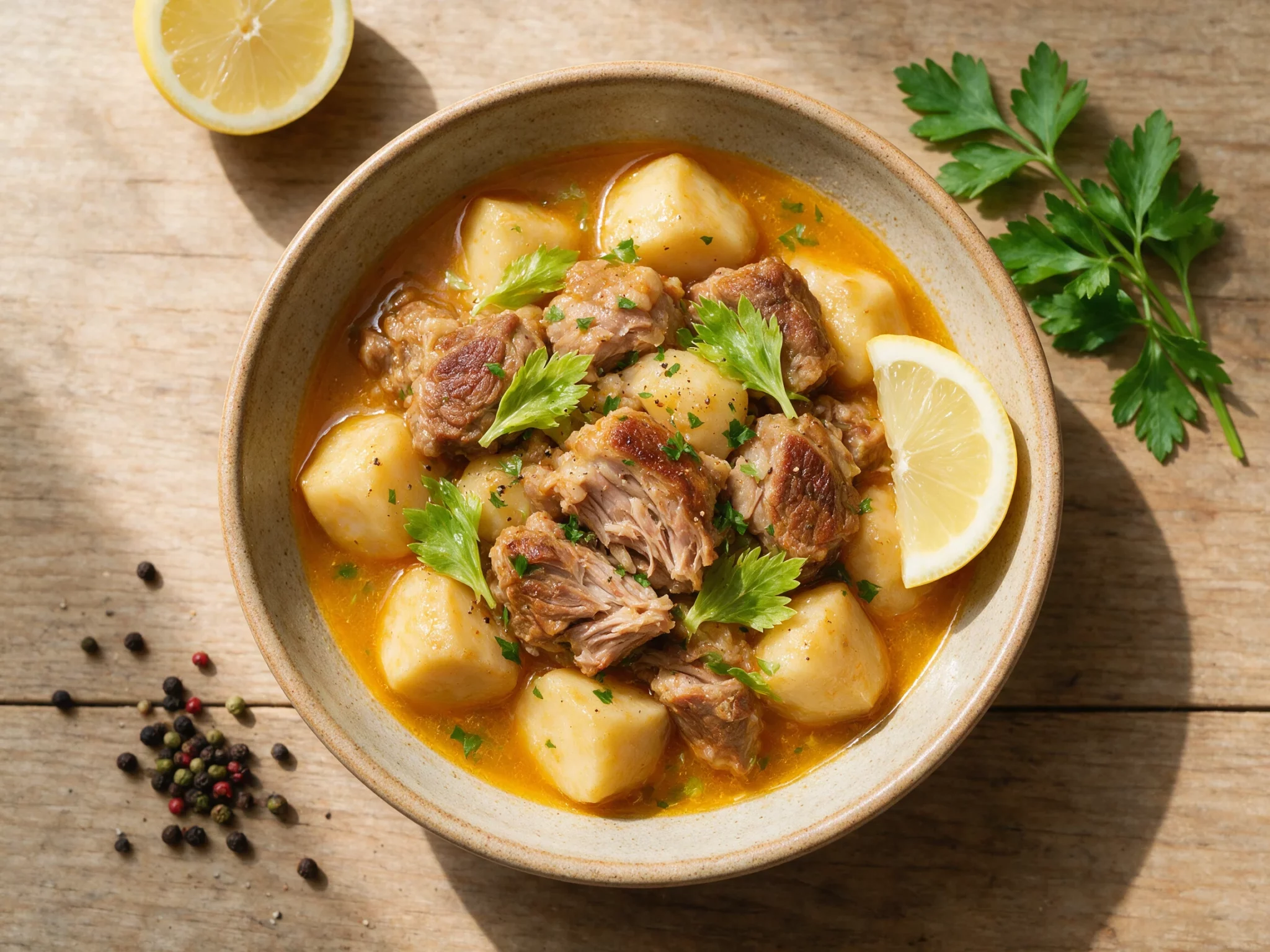
Cypriot Braised Pork and Kolokasi Stew with Fresh Lemon
Ingredients
Method
- Peel the kolokasi under running water, wearing kitchen gloves if your skin is sensitive since raw taro can cause mild itching. Cut into 4 cm / 1.5-inch chunks and drop into a bowl of cold water with a splash of lemon juice to stop browning.
- Cut the pork shoulder into 4 cm / 1.5-inch cubes and pat dry with paper towels. Drying the pork helps it brown instead of steam in the pot.
- Chop the onion, slice the celery, and mince the garlic. Set everything aside near the stove.
- Heat 2 tbsp olive oil in a 26 cm / 10-inch dutch oven over medium-high heat. Brown the pork in two batches, about 4 minutes per batch, until deep golden on most sides. Don't crowd the pot or the pork will steam instead of brown. Set the pork aside on a plate.
- Add the remaining 1 tbsp oil to the pot. Add the onion and celery and cook 5 minutes, stirring, until soft. Add the garlic and cook 30 seconds until fragrant.
- Stir in the tomato paste and cook 1 minute, until it darkens slightly and smells toasty.
- Return the pork to the pot with the bay leaves, salt, pepper, and stock or water. Bring to a boil, then lower the heat, cover, and simmer 45 minutes, until the pork starts to soften.
- Drain the kolokasi and add it to the pot. Simmer uncovered for 30 to 35 minutes, until the pork is fork-tender and the kolokasi pierces easily with a knife, with a creamy center.
- Stir in the lemon juice, taste, and adjust salt if needed. Simmer 5 more minutes.
- Remove the bay leaves. Let the stew rest 5 minutes, scatter the reserved celery leaves on top, and serve warm with bread.
Notes
- Kolokasi is the Cypriot name for taro root, sold fresh or frozen.
- Wear gloves when peeling raw kolokasi if your skin is sensitive.
- Pork shoulder gives the best texture after a long simmer.
- Simmer time may vary depending on how large you cut the taro.
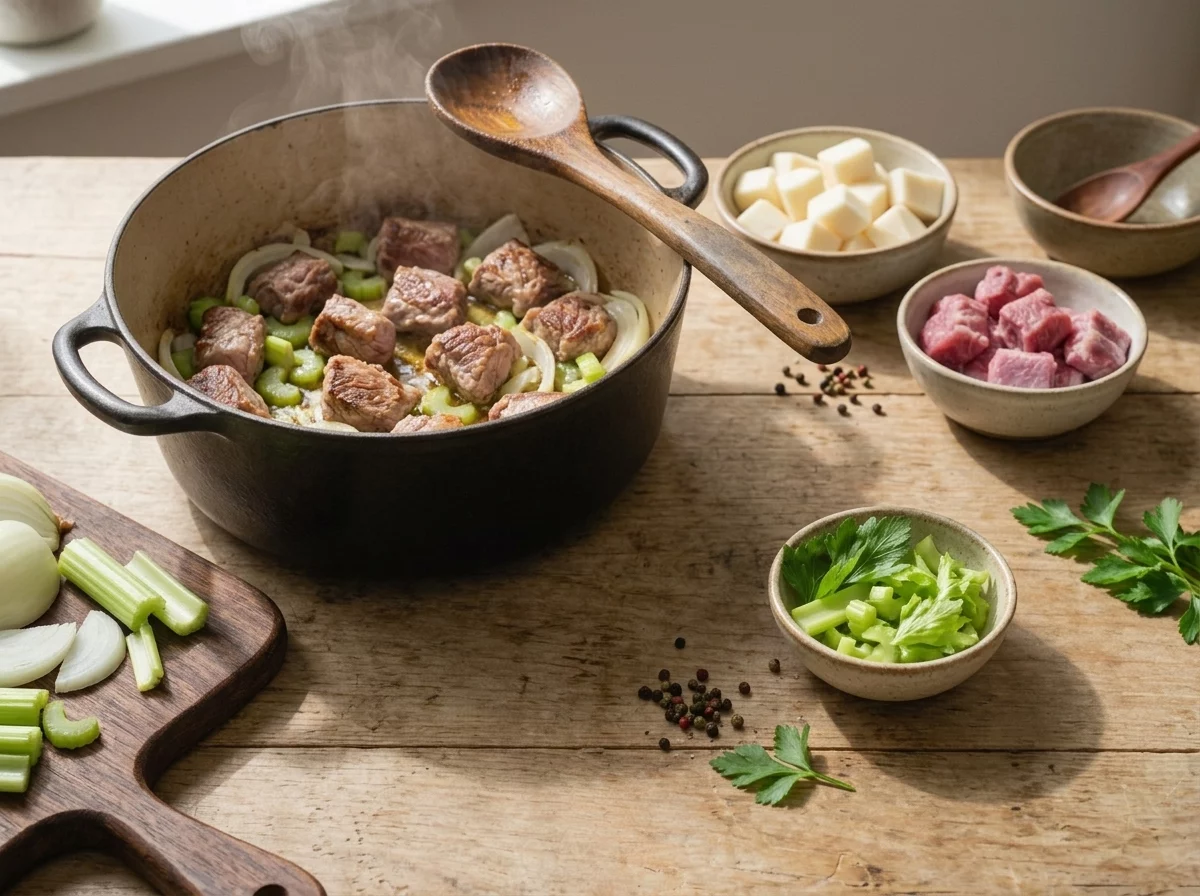
Tips for Success
- Cut the kolokasi into even 4 cm pieces so every chunk cooks through at the same time.
- Brown the pork in two batches so it browns instead of steaming in a crowded pot.
- Soak peeled kolokasi in lemon water to stop it from turning brown before it hits the pot.
- Add lemon juice near the end of cooking so the broth stays bright instead of turning flat.
- Use pork shoulder, not loin, since the extra fat keeps the meat juicy through the long simmer.
Variations
- Swap kolokasi for celeriac or waxy potatoes if taro isn’t sold near you, though the texture will be softer.
- Add a handful of chopped fresh tomatoes with the tomato paste for a thicker, more tomatoey sauce.
- Use bone-in chicken thighs instead of pork shoulder for a lighter stew that cooks about 20 minutes faster.
Storage and Reheating
Kolokasi with pork keeps well in the fridge for 3 to 4 days in a sealed container. The flavor is often better the next day, once the lemon and tomato have had time to settle into the pork.
To reheat, warm it in a pot over medium-low heat for 8 to 10 minutes, stirring now and then, until hot through. Add a splash of water or stock if the broth has thickened too much in the fridge.
This stew also freezes well for up to 3 months. Thaw it in the fridge overnight before reheating on the stove.
Serving Suggestions
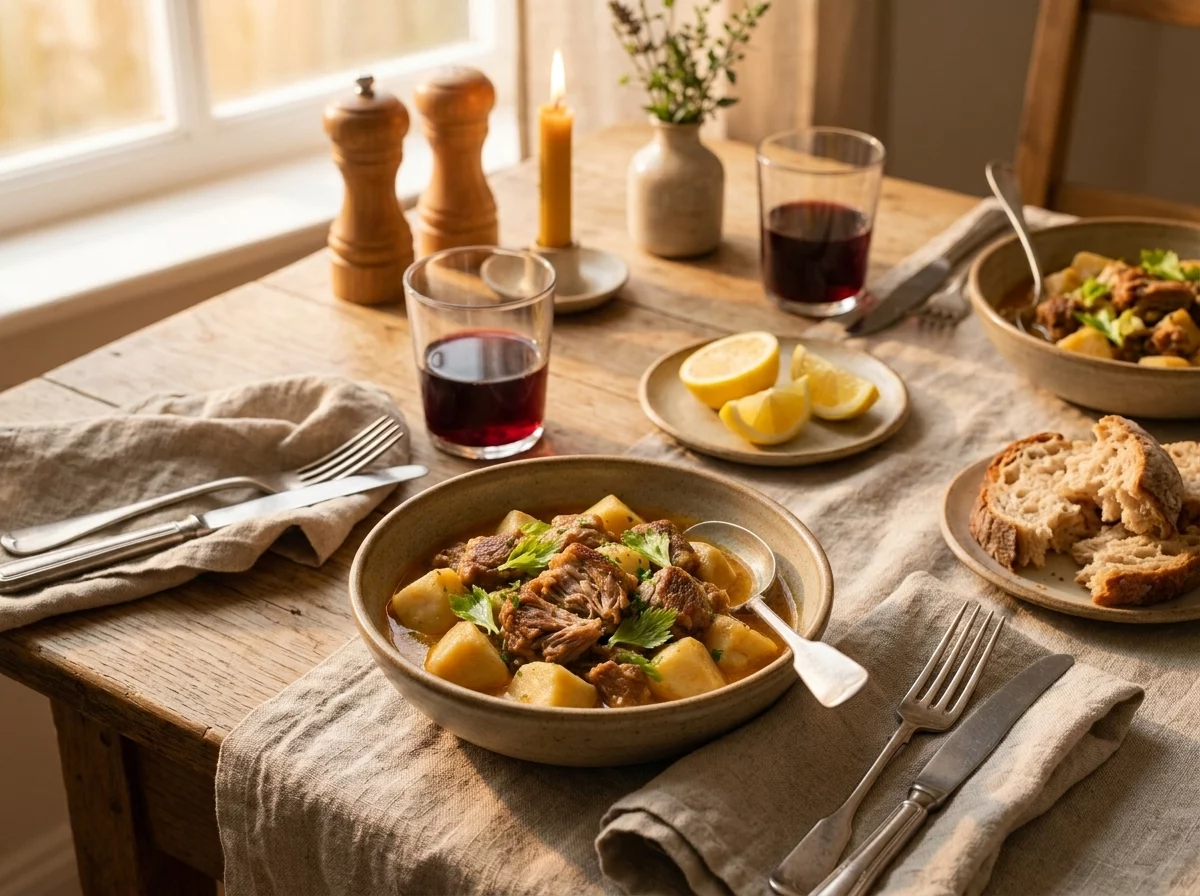
Kolokasi with pork is filling on its own, but I like a slice of crusty bread on the side for soaking up the broth.
A simple cucumber tomato feta salad adds a fresh, crunchy contrast to the soft stew. A glass of dry red wine works well too.
Leftovers make a good lunch reheated in a bowl with an extra squeeze of lemon on top.
FAQ
Why is my kolokasi still hard after cooking?
Your kolokasi pieces were probably cut too large or simmered for too little time. Cut the taro into even 4 cm / 1.5-inch chunks and give it a full 30 to 35 minutes once it goes into the pot. It’s done when a knife slides in easily and the center feels creamy, not chalky.
Can I use potatoes instead of kolokasi in this pork stew?
Yes, though the stew won’t taste quite the same. Potatoes cook faster and break down more, so add them about 20 minutes before the pork is done instead of 30. Kolokasi has a starchier, slightly nutty flavor that potatoes don’t fully copy, but it’s a fine swap if taro isn’t available.
Can I make this Cypriot pork and kolokasi stew a day ahead?
Yes, and it actually tastes better the next day. Cook it fully, cool it, and store it in the fridge for up to 4 days, then reheat gently on the stove before serving. The lemon and tomato flavors settle into the pork and taro overnight.
What goes well with kolokasi with pork?
Crusty bread and a simple Greek salad are my go-to sides. The bread soaks up the lemony broth, and the salad’s crunch balances the soft texture of the stew. A glass of dry red wine or an extra squeeze of lemon at the table works well too.
Do I need to wear gloves when peeling kolokasi?
It’s a good idea if your skin is sensitive. Raw taro contains tiny calcium oxalate crystals that can make bare hands itch or feel irritated while peeling. Wearing kitchen gloves or peeling it under running water helps, and cooking it fully breaks the crystals down so it’s safe to eat.
What’s the difference between kolokasi and regular taro root?
Kolokasi is just the Greek and Cypriot name for taro root, so it’s the same vegetable. Some kolokasi sold in Cypriot markets is a bit smaller and starchier than the taro found in Asian or Caribbean grocery stores, but you can use either one in this stew.