
Jump to Recipe
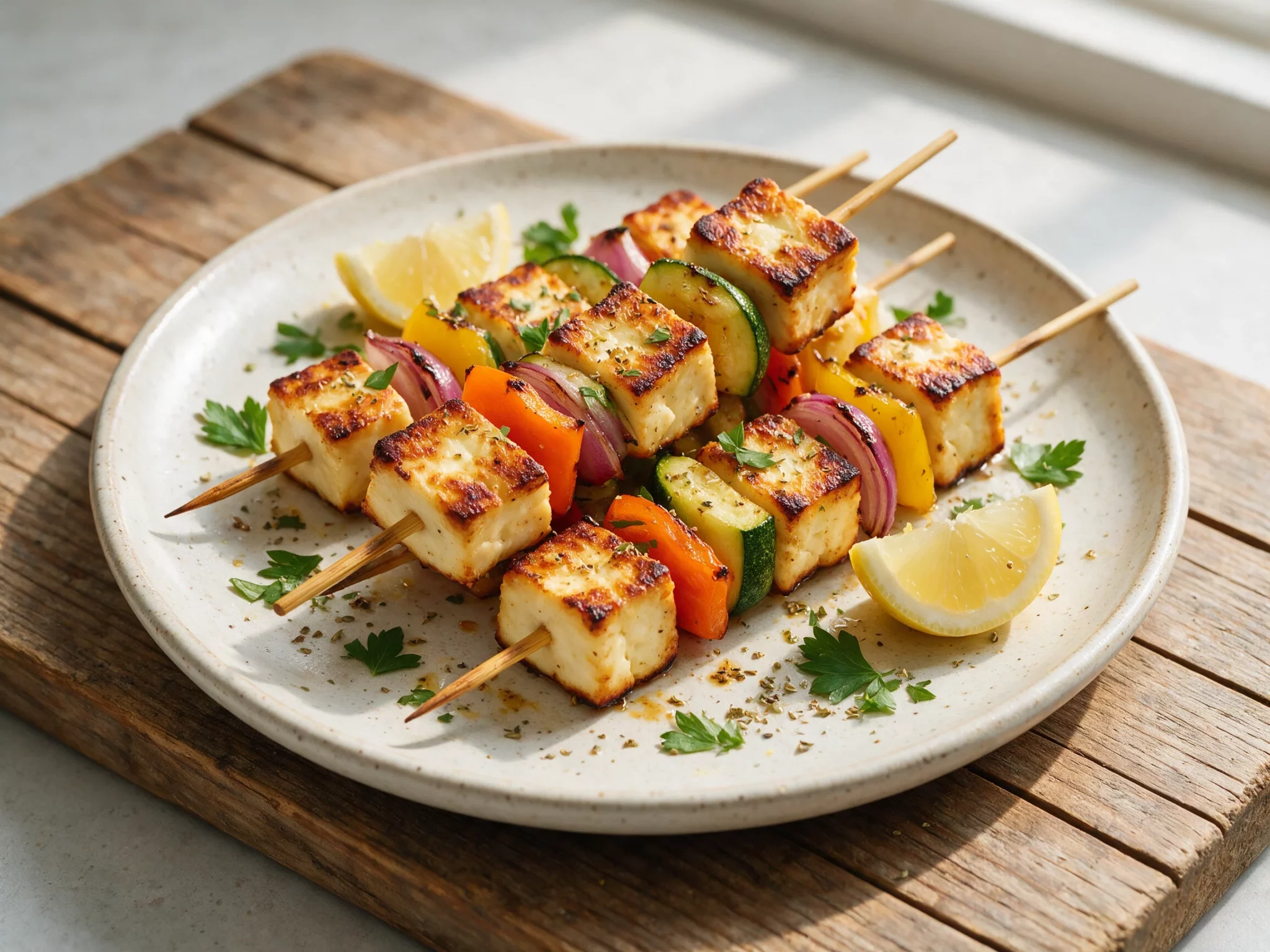
Halloumi souvlaki is a vegetarian twist on the classic Greek skewer, swapping meat for thick cubes of halloumi cheese marinated in lemon juice, olive oil, garlic, and oregano.
The cheese holds its shape on the grill, so you get a golden, slightly charred outside while the inside stays soft and warm. The lemon marinade keeps everything bright, and the oregano gives it that familiar Greek flavor.
I thread the halloumi with bell peppers, red onion, and cherry tomatoes, so each skewer is a full bite of cheese and vegetables. Don’t marinate the halloumi for hours, though. Lemon juice softens the cheese fast, and after an hour it starts to lose its bite.
This is a good recipe for a summer dinner or a side next to grilled chicken or lamb. It comes together in under an hour, most of that just marinating time.
Why You’ll Love This Recipe
- Ready in about an hour with mostly hands-off marinating time
- Halloumi holds its shape on the grill, no falling apart
- One marinade seasons both the cheese and the vegetables
- Works as a main dish or a side next to grilled meat
Ingredient Notes
- Halloumi: Use a firm block, not the pre-sliced kind, so the cubes hold together on the skewer. It’s naturally salty, so go easy on added salt.
- Lemon juice: Fresh squeezed tastes brighter than bottled. About 2 medium lemons gives you 60 ml.
- Dried oregano: Greek oregano works best here. Fresh oregano works too, just use about a tablespoon chopped.
- Wooden skewers: Soak them in water for 30 minutes before threading, or use metal skewers and skip the soaking.
- Red onion: Cut the chunks close to the size of the halloumi cubes so everything grills at the same rate.
Grilled Halloumi Souvlaki Skewers with Lemon Herbs
Ingredients
Method
- If using wooden skewers, soak them in water for 30 minutes so they don't burn on the grill.
- Whisk the olive oil, lemon juice, lemon zest, garlic, oregano, black pepper, and salt in a mixing bowl.
- Cut the halloumi into 2.5 cm cubes and the peppers and red onion into chunks about the same size.
- Add the halloumi, peppers, and onion to the bowl and toss gently to coat. Cover and marinate in the fridge for 30 minutes. Don't go longer, or the lemon juice will start to soften the cheese too much.
- Thread the halloumi, pepper, onion, and cherry tomatoes onto the skewers, alternating as you go.
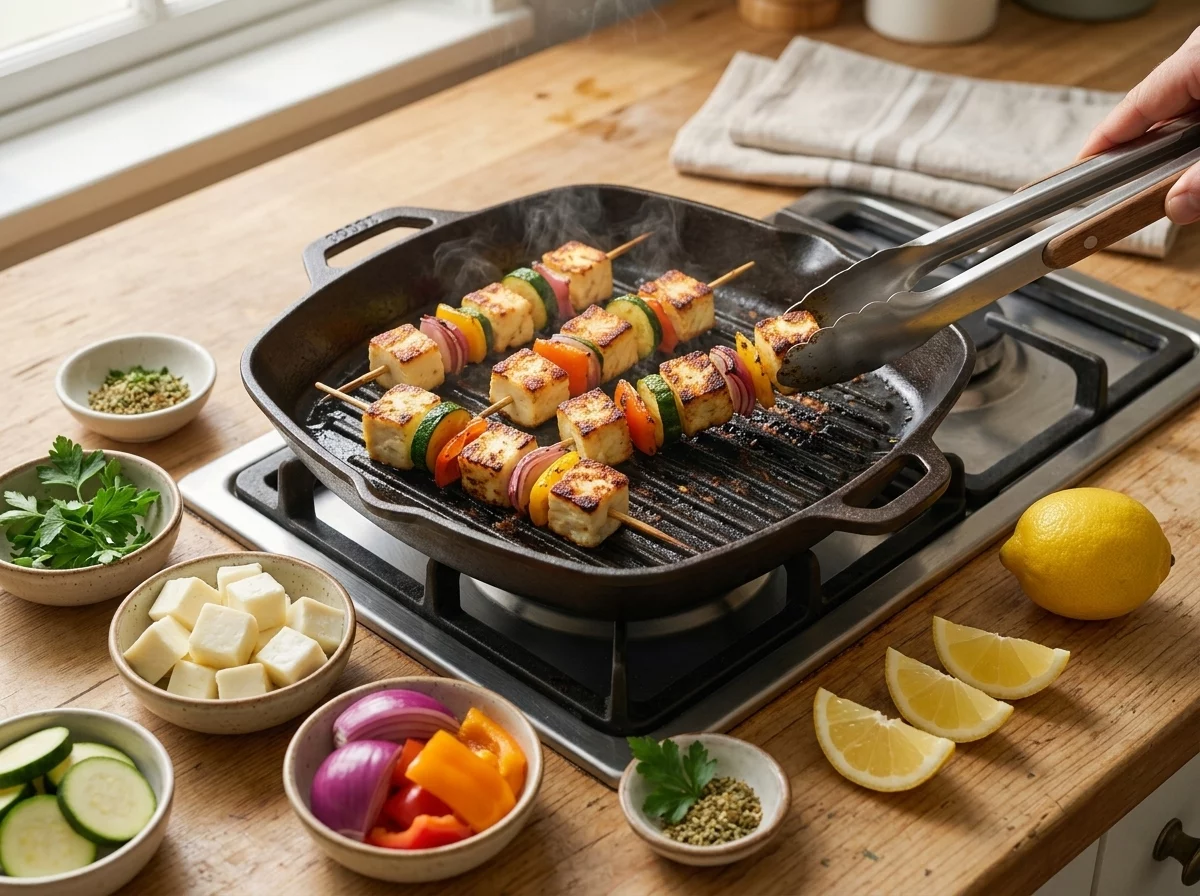
- Heat a 30 cm / 12-inch grill pan over medium-high heat and brush lightly with olive oil.
- Grill the skewers in two batches of 4, leaving space between them so they char instead of steam.
- Cook for 2 to 3 minutes per side, turning with tongs, until the halloumi is golden with grill marks and the vegetables are charred at the edges, 8 to 10 minutes total per batch.
- Transfer the skewers to a platter, squeeze fresh lemon over the top, and sprinkle with chopped parsley.
- Serve warm with extra lemon wedges on the side.
Notes
- Soak wooden skewers for 30 minutes so they don't burn on the grill.
- Marinate halloumi no longer than 30 minutes to keep its texture firm.
- Don't crowd the grill pan, leave space between skewers so they char instead of steam.
- Pat halloumi dry before threading so it browns instead of steaming.
Tips for Success
- Cut halloumi into 2.5 cm cubes so each piece grills through without melting apart on the skewer.
- Marinate for 30 minutes only, since halloumi left in lemon juice for hours turns soft and loses its bite.
- Pat the halloumi dry before threading so the marinade clings instead of sliding off in the pan.
- Heat the grill pan until it’s really hot before adding skewers, so the cheese chars fast without turning rubbery.
- Cut vegetables to match the size of the halloumi cubes so everything cooks at the same rate.
Variations
- Swap bell peppers and onion for zucchini and cherry peppers for a softer, sweeter bite on the skewer.
- Add a pinch of chili flakes to the marinade if you want a little heat behind the lemon and herbs.
- Skip the skewers and grill halloumi slabs whole, then serve them sliced over the same charred vegetables.
Storage and Reheating
Halloumi souvlaki is best eaten right off the grill while the cheese is still warm and a little squeaky in the center. Once it cools, the cheese firms up and turns rubbery, so reheating never brings back that same texture.
If you want to prep ahead, make the marinade and cut the vegetables and halloumi up to a day ahead, keep them separate in the fridge, then thread the skewers and grill right before you eat.
Leftover cooked skewers keep in an airtight container in the fridge for 2 to 3 days. I like to pull the halloumi and vegetables off the skewers and toss them cold into a salad or grain bowl instead of reheating them.
Serving Suggestions
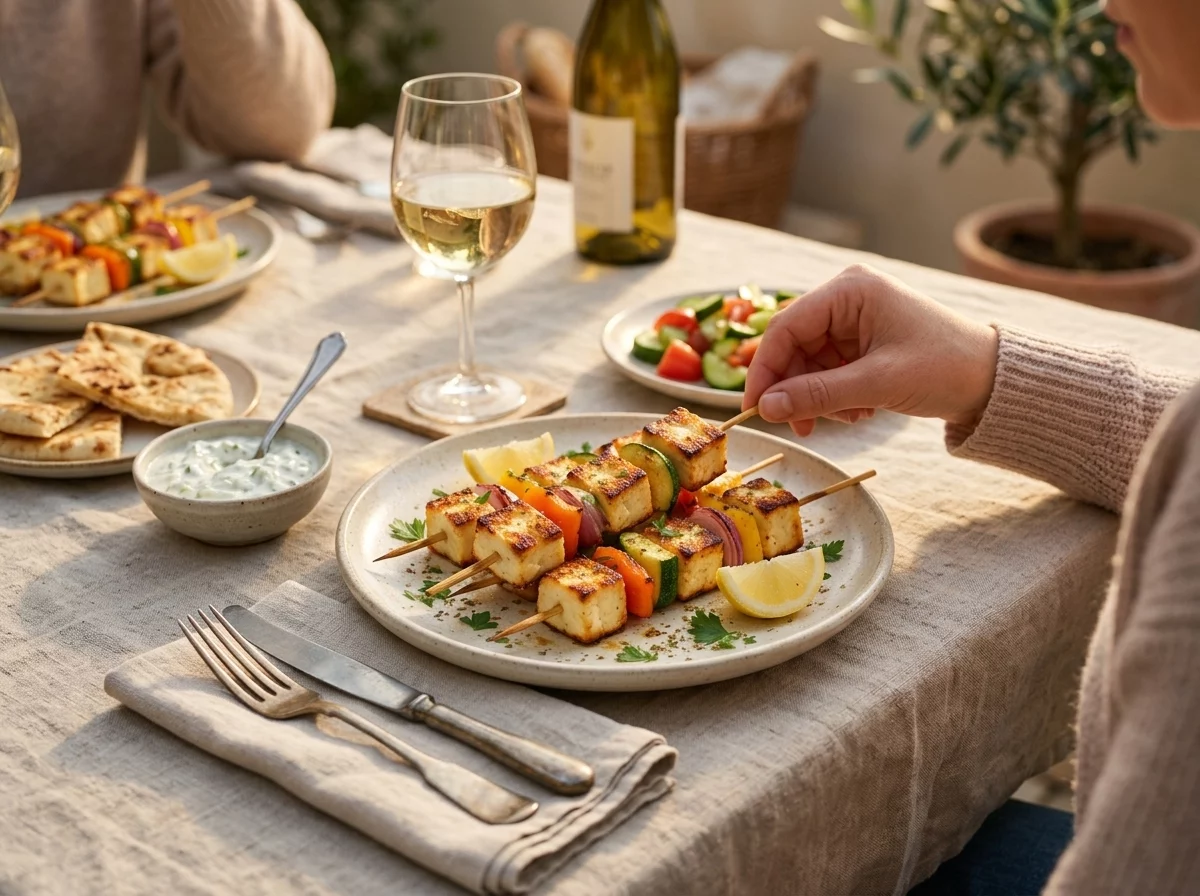
Warm pita and a bowl of tzatziki turn these skewers into a full meal fast. A simple Greek salad with cucumber, tomato, and a few olives sits well next to them too.
For something more filling, serve the skewers over rice or orzo, then spoon any extra marinade juices over the top. Lemon wedges on the side let everyone add more brightness at the table.
These also work well as a side dish next to grilled chicken or lamb, since they share the same lemon and oregano flavors.
FAQ
Why is my halloumi souvlaki rubbery after grilling?
Halloumi turns rubbery when it’s overcooked or left over high heat too long, since the cheese proteins tighten up. Grill each side for 2 to 3 minutes only, until golden with light grill marks, then pull it off. Marinating longer than an hour in the lemon juice can also break down the texture, so stick to 30 minutes.
Can I use wooden skewers instead of metal for halloumi souvlaki?
Yes, wooden skewers work fine as long as you soak them in water for 30 minutes before threading, so they don’t scorch on the grill pan. Metal skewers heat up and cook the halloumi a little from the inside too, so if you have them, use those for slightly faster, more even cooking.
Can I make the lemon herb marinade ahead and store the skewers before grilling?
Yes, you can mix the marinade and cut the halloumi and vegetables up to a day ahead. Keep everything separate in covered containers in the fridge, then combine and marinate for just 30 minutes before threading and grilling, since halloumi sitting too long in lemon juice gets a soft, mushy texture.
What goes well with halloumi souvlaki?
Warm pita, a scoop of tzatziki, and a simple Greek salad with cucumber and tomato all work well next to these skewers. I also like them over rice or orzo with extra lemon wedges on the side, since the marinade juices soak into the grain nicely.
Is halloumi souvlaki gluten free?
Yes, halloumi souvlaki is gluten free on its own, since the marinade uses just olive oil, lemon juice, garlic, and herbs. Double check that your skewers and any store-bought halloumi don’t include gluten-based additives, and skip the pita or swap in a gluten-free flatbread if you’re serving it that way.
What’s the difference between halloumi souvlaki and traditional Greek souvlaki?
Traditional Greek souvlaki uses skewered and grilled meat, usually pork or chicken, marinated in lemon, oil, and oregano. This version swaps the meat for halloumi cheese, using the same lemon herb marinade, so it’s a vegetarian take on the same grilling method and flavors.