
Jump to Recipe
Traditional Cretan dakos is a rusk salad from the island of Crete. A hard barley rusk is topped with grated ripe tomato, crumbled feta, olives, and olive oil. The tomato juice softens the bread as it sits.
It tastes fresh and salty, with a soft top and a little bite in the middle. The grated tomato carries most of the flavor, so use the ripest ones you can find. There’s no cooking, and it’s ready in 20 minutes.
One thing can go wrong. If you soak the rusk in water for too long, it turns to mush. I only hold mine under the tap for 2 seconds, and only when it’s rock hard.
On Crete it’s often made with soft mizithra cheese. I use feta because it’s easier to find.
Why You’ll Love This Recipe
- Ready in 20 minutes with no stove or oven
- Uses simple ingredients you can find in most stores
- Tomato juice softens the rusk, so there’s no dressing to make
- Works as a light lunch or a shared starter
Ingredient Notes
- barley rusks: Look for packs labeled dakos or paximadia in Greek shops or online. If you can’t find them, dry whole-grain bread slices in the oven until hard (see the FAQ).
- ripe tomatoes: Choose fully red tomatoes that give a little when pressed. Out of season, ripe plum tomatoes work better than pale round ones.
- feta: Feta is salty, so taste the tomato before adding more salt. Fresh mizithra is the classic Cretan choice and makes a milder, creamier topping. Check the label if you need vegetarian feta.
- extra-virgin olive oil: The oil isn’t cooked here, so use one you like the taste of. A fruity, slightly peppery oil works well.
- capers: Capers add a sharp, salty note. Drain them, and skip them if you don’t like them.
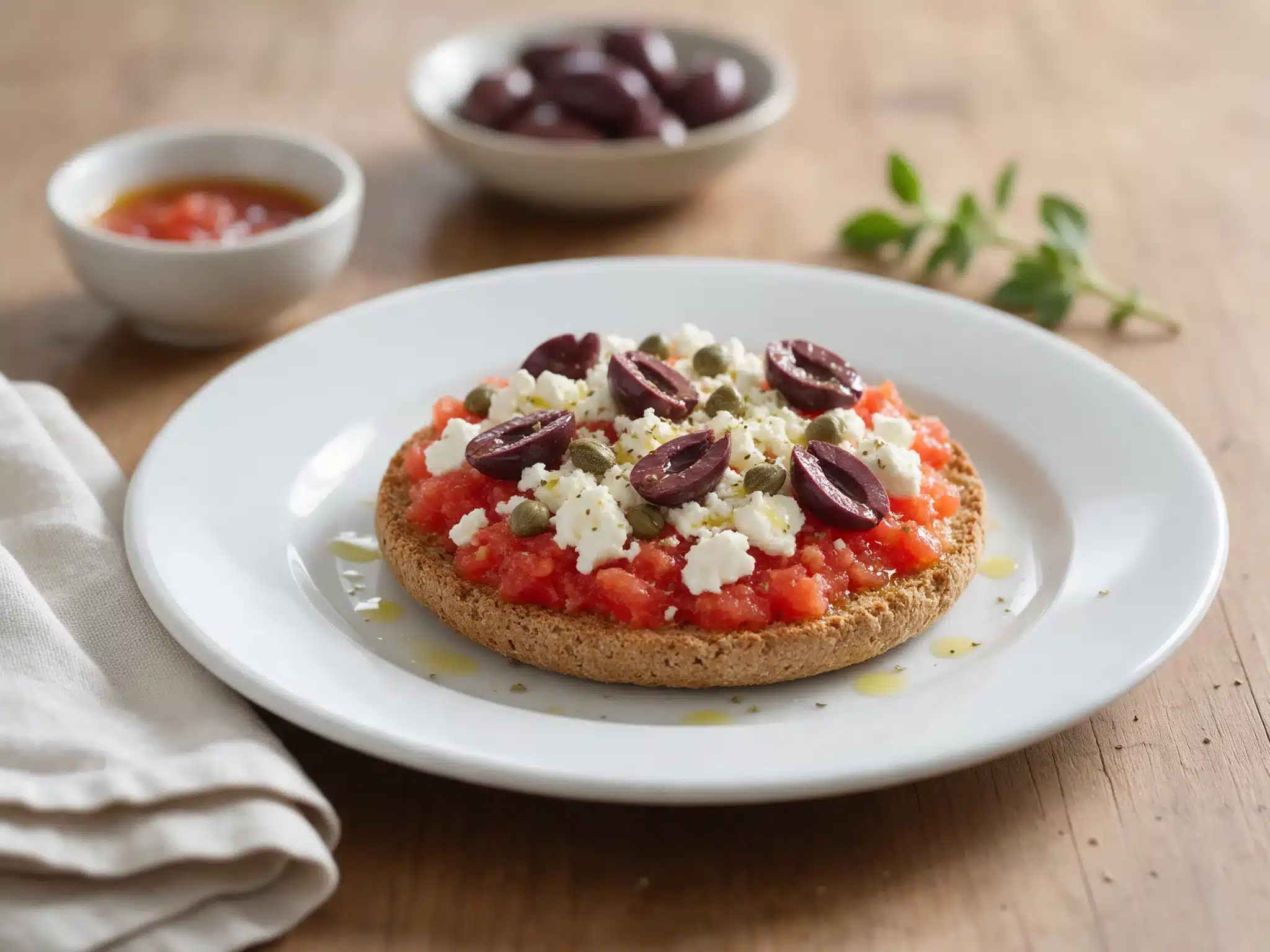
Cretan Dakos with Grated Tomato, Feta and Barley Rusks
Ingredients
Method
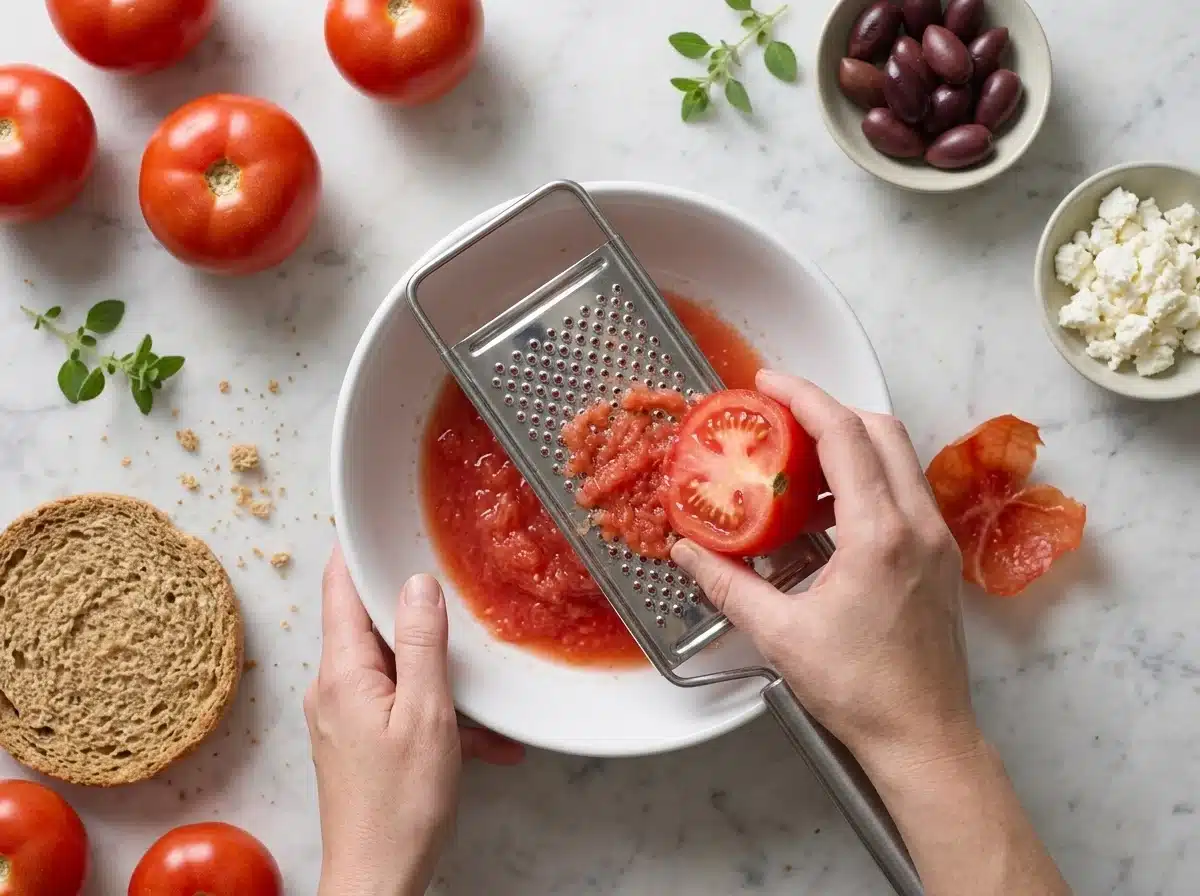
- Cut the tomatoes in half across the middle. Grate each half on the coarse holes of a box grater into a 2 L / 2-quart bowl, pressing the cut side against the grater until only the skin is left in your hand. Discard the skins, then stir in 1 tablespoon of the olive oil and the salt. The tomato should taste fresh and lightly salty.
- Set one rusk on each of four 20 cm / 8-inch plates. If your rusks are rock hard, hold each one under running tap water for 2 seconds, then shake off the drips. Don't soak them longer, or they'll turn to mush.
- Spoon a quarter of the grated tomato and its juice over each rusk, starting with the juice so it soaks in. Let the plates sit for 10 minutes. Press the center of a rusk with a fork. It should give a little, with a soft outside and a slight bite in the middle.
- Crumble about 35 to 40 g of feta over each rusk, then scatter on 3 olives and a quarter of the capers. Sprinkle each plate with 1/4 teaspoon of oregano and drizzle the remaining 3 tablespoons of olive oil evenly over the four plates. Serve within 30 minutes.
Notes
- Use the ripest tomatoes you can find and keep every drop of the juice.
- Taste the grated tomato after salting, then stop, because feta, olives and capers add more salt.
- Hold rock-hard rusks under water for 2 seconds at most.
- Serve within 30 minutes of assembling, since the rusk keeps softening as it sits.
- Rusks vary in thickness. For thick ones, spoon on extra tomato juice instead of adding water.
Tips for Success
- Grate the tomatoes on the coarse side of a box grater and keep all the juice, because the juice is what softens the rusk.
- Hold rock-hard rusks under running water for 2 seconds at most, then shake off the drips before adding the tomato.
- Taste the grated tomato after adding the salt and stop there. Feta, olives and capers add more salt later.
- Choose tomatoes that are fully red and give slightly when pressed, since pale ones taste watery once grated.
- Wait the full 10 minutes, then press the center of a rusk with a fork to check it has softened.
Variations
- Use 150 g fresh mizithra, or fresh ricotta if you can’t find it, instead of feta for a milder, creamier topping.
- Add a few thin slices of red onion and some cucumber on top of the tomato for extra crunch and freshness.
- Leave out the feta and add an extra tablespoon of capers and a few more olives for a dairy-free version.
Storage and Reheating
Dakos is best eaten within 30 minutes of assembling. The rusk keeps softening once the tomato is on, and after about an hour it turns mushy. It’s served cold or at room temperature, so there’s nothing to reheat.
To get ahead, grate the tomatoes and mix in the salt and 1 tablespoon of oil. Cover and refrigerate for 1 to 2 days, then stir and let it come to room temperature for 15 minutes before using. Keep the rusks in an airtight container at room temperature for up to 2 months once the bag is open. Crumble the feta just before serving.
If you have leftovers, cover and refrigerate them for up to 24 hours. The rusk will be much softer, closer to a bread salad, but it still tastes good.
Serving Suggestions
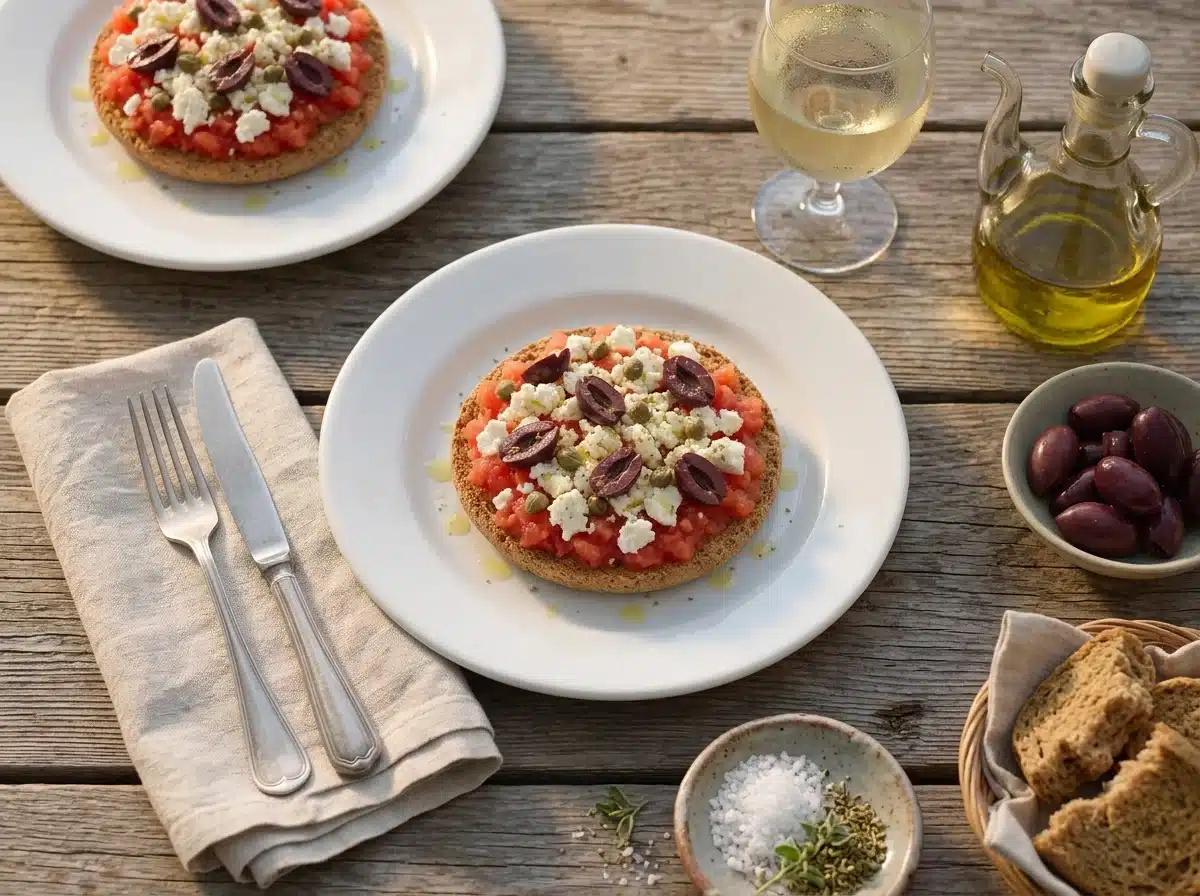
I serve dakos on individual plates so everyone gets their own rusk. One rusk each is a light lunch. For a starter, serve it at the start of a bigger spread.
For a fuller meal, add grilled sardines, fried zucchini or a plate of stuffed grape leaves. A chilled Cretan white wine like Vidiano goes well with it, or sparkling water with a squeeze of lemon.
Put the olive oil bottle and extra oregano on the table so people can add more. You’ll want a fork and a knife, since the rusk is soft on top but still has some bite.
FAQ
How do I know when dakos is ready to eat?
Dakos is ready after about 10 minutes of resting with the tomato on top. Press the center of the rusk with a fork. It should give a little, with a soft outside and a slight bite in the middle. If the fork meets a hard center, spoon on more tomato juice and wait 5 more minutes.
Can I use regular bread instead of barley rusks for dakos?
Yes, but only dry bread works. Cut 2 cm / 3/4-inch slices of whole-grain bread and bake them at 150 C / 300 F for 30 to 40 minutes, until they’re hard and fully dry. Fresh bread turns to mush under the tomato, and small croutons soak through too fast. Barley rusks hold their shape best.
Can I make dakos ahead for a party, or will the rusk go soggy?
You can prep the tomato mixture 1 to 2 days ahead, but assemble the plates no more than 30 minutes before serving. Keep the grated tomato covered in the fridge and the rusks in an airtight container. Once the tomato goes on, the rusk keeps softening and turns mushy after about an hour.
What goes with dakos if I want to turn it into a full dinner?
Grilled sardines, fried zucchini or a plate of stuffed grape leaves all work well. Dakos is light and salty, so pair it with something warm and a little crisp. A chilled Cretan white wine like Vidiano, or sparkling water with lemon, is a good match.
Is Cretan dakos vegetarian, and how do I make it dairy free?
Cretan dakos is vegetarian as written, though some feta is made with animal rennet, so check the label. It isn’t gluten free, since barley rusks contain gluten. For a dairy-free version, leave out the feta and add an extra tablespoon of capers and 4 more olives.
What’s the difference between dakos and bruschetta?
Dakos uses a hard, dry barley rusk that’s softened by grated tomato juice, usually with no toasting or garlic. Bruschetta uses sliced bread that’s grilled or toasted, rubbed with garlic, then topped with chopped tomato. So dakos ends up softer and more like a salad, while bruschetta stays crisp.