
Jump to Recipe
Greek honey cake is a moist semolina cake baked with olive oil and yogurt, then soaked in a honey and lemon syrup once it comes out of the oven, much like the soak used in a Greek lemon yogurt cake. The semolina gives it a soft, slightly grainy crumb, and the syrup keeps every bite sticky without being too sweet.
I make this cake when I want something simple that still feels a little special. It comes together in one bowl for the batter and one small pot for the syrup, so cleanup is easy.
The walnuts add crunch on top and a little bitterness that balances the honey. Orange zest in the batter, similar to the citrus base in a soft orange olive oil cake, and lemon juice in the syrup keep the whole cake from tasting flat.
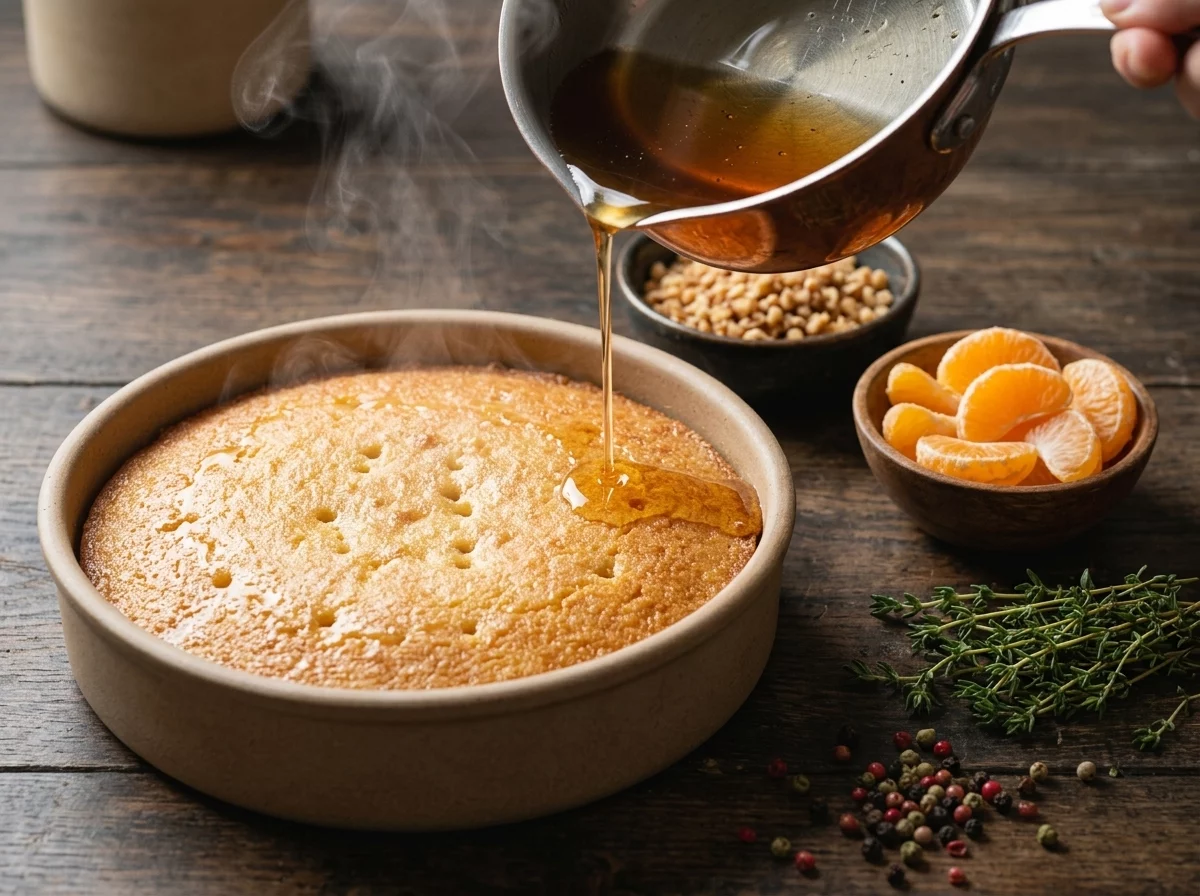
One thing I learned after a few soggy attempts: the syrup needs to be cold when it goes over the hot cake. If both are warm, the cake turns dense instead of staying light.
Why You’ll Love This Recipe
- Moist crumb that stays soft for days
- One bowl for batter, one pot for syrup
- Honey syrup keeps sweetness balanced with lemon and orange
- Simple ingredients you likely already have in the pantry
Ingredient Notes
- Semolina: Use fine semolina, not coarse, for a smoother crumb. Coarse semolina works but gives a grittier bite.
- Olive oil: A mild olive oil works best here. A strong extra virgin oil can taste bitter once baked.
- Greek yogurt: Plain full-fat yogurt keeps the cake moist. Low-fat yogurt works but the crumb turns out a bit drier.
- Honey: Use a honey you like the taste of, since it’s the main flavor in the syrup. A mild wildflower honey works well.
- Walnuts: Toast them in a dry pan for 5 minutes before chopping to bring out more flavor.
- Orange zest: Zest the orange before you juice anything else. Use a well-washed or organic orange since you’re using the skin.
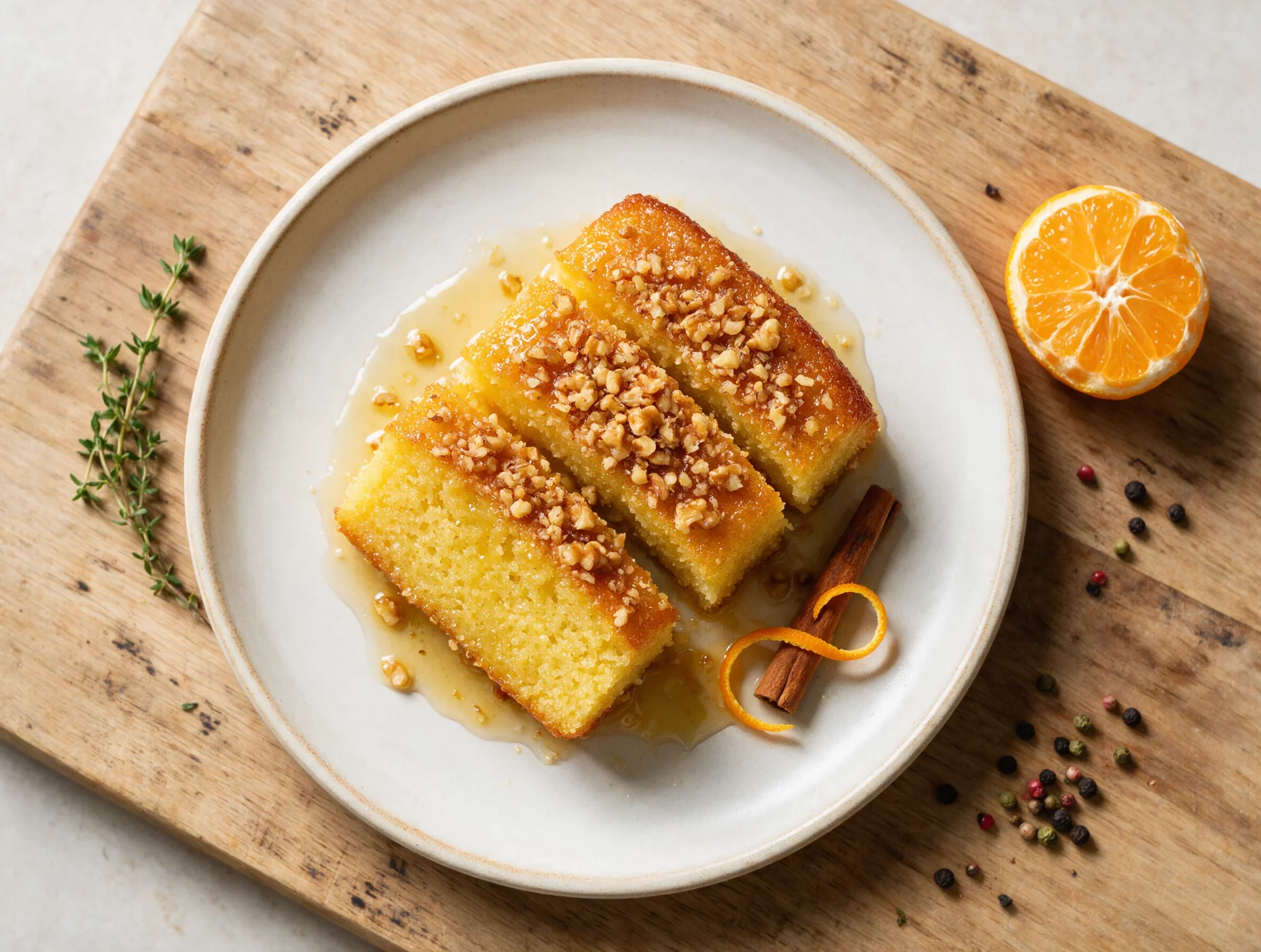
Baked Greek Honey Cake with Walnuts and Lemon Syrup
Ingredients
Method
- Combine the honey, sugar, water, cinnamon stick, and orange zest strip in a 1.5-quart / 1.5 L saucepan. Bring to a simmer over medium heat and cook for 5 minutes, stirring once or twice.
- Remove from the heat, take out the cinnamon stick and zest, and stir in the lemon juice. Let the syrup cool to room temperature while you make the cake, then chill it in the fridge until cold.
- Preheat the oven to 180 C / 350 F. Grease a 23 cm / 9-inch round cake pan and line the base with parchment paper.
- Whisk the semolina, flour, baking powder, baking soda, salt, and cinnamon together in a mixing bowl.
- In a second bowl, whisk the eggs and sugar for 1 to 2 minutes until pale and slightly thick. Whisk in the olive oil, yogurt, and orange zest until smooth.
- Pour the wet mixture into the dry ingredients and fold together with a spatula until no dry streaks remain. Fold in 80 g of the chopped walnuts. The batter will be thick, closer to a muffin batter than a runny cake batter.
- Spread the batter into the prepared pan and smooth the top with the back of a spoon. Bake for 35 to 40 minutes, until a toothpick inserted in the center comes out clean and the top is golden brown.
- As soon as the cake comes out of the oven, poke 20 to 25 holes across the top with a wooden skewer.
- Pour the cold syrup slowly and evenly over the hot cake, working in two or three additions so it has time to soak in instead of pooling on top.
- Let the cake rest in the pan for at least 1 hour so the syrup absorbs fully. Scatter the remaining 40 g walnuts over the top, slice, and serve.
Notes
- Use cold syrup on a hot cake, never both hot at once.
- Fine semolina gives a softer crumb than coarse semolina.
- Let the cake rest a full hour before slicing.
- Toast walnuts first for more flavor in the topping.
Tips for Success
- Chill the syrup fully before it touches the cake, or the crumb turns dense instead of staying light and soaked through.
- Use fine semolina, not coarse, so the crumb stays soft instead of gritty.
- Poke plenty of holes with the skewer so the syrup reaches the center of the cake, not just the top layer.
- Toast the walnuts for 5 minutes in a dry pan before chopping, it makes the topping taste stronger.
- Let the cake sit for the full hour before slicing, the middle needs time to soak up the syrup evenly.
Variations
- Swap the walnuts for pistachios or almonds for a different crunch and a lighter color on top.
- Add 1 tsp ground cloves or cardamom to the batter for a warmer, spiced version of the cake.
- Use half whole wheat flour instead of all-purpose flour for a nuttier, denser crumb with more fiber.
Storage and Reheating
Greek honey cake keeps at room temperature for up to 3 days if you cover it tightly, since the syrup keeps the crumb moist. In the fridge, it lasts 5 to 6 days, though the syrup firms up a little when cold.
I like this cake at room temperature, but you can warm a slice in the microwave for 10 to 15 seconds if you want the syrup to loosen back up. Skip the oven, it dries out the edges and the cake doesn’t need it.
I don’t recommend freezing this one. The syrup separates a little as it thaws and the texture turns wet in a different way, more soggy than soaked.
Serving Suggestions
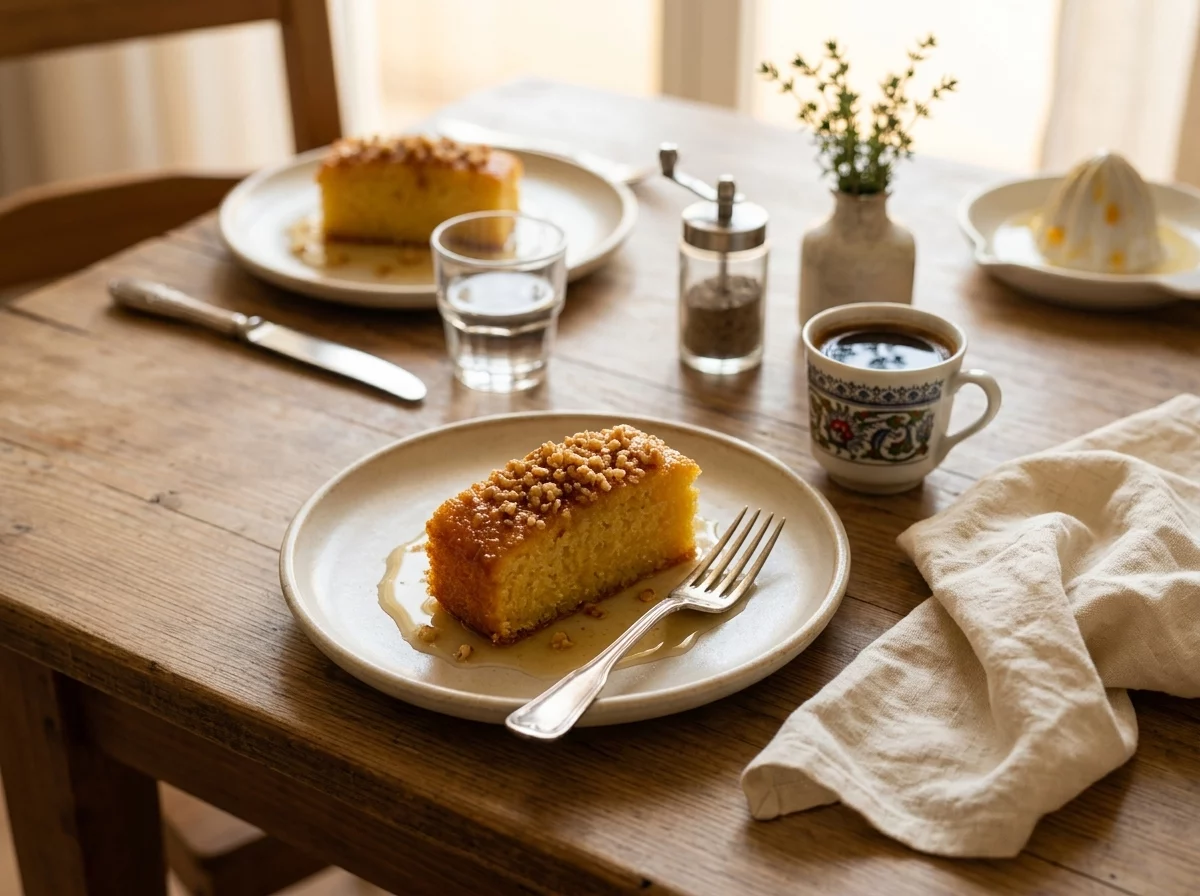
Serve Greek honey cake at room temperature with a strong cup of coffee or Greek coffee. The bitterness cuts through the sweetness of the syrup.
A spoonful of thick Greek yogurt on the side works too, it adds a tangy contrast to the honey. I also like a few extra walnuts and a light dusting of cinnamon on top right before serving.
This cake works for a weekend breakfast alongside fresh fruit, or as a dessert after a Sunday roast.
FAQ
Why is my Greek honey cake soggy instead of soaked through?
This usually happens when the syrup and the cake are the same temperature. Pour cold syrup over a hot cake, or hot syrup over a fully cooled cake, but never hot syrup on a hot cake. That contrast lets the crumb absorb the syrup slowly instead of turning wet and dense.
Can I use almonds instead of walnuts in this honey cake?
Yes, almonds or pistachios work fine in place of walnuts, use the same 80 g in the batter and 40 g on top. Toast them first for more flavor. The texture stays close to the original, just slightly less bitter than walnuts.
Can I make Greek honey cake a day ahead?
Yes, and it actually tastes better the next day once the syrup has fully settled into the crumb. Bake it, soak it, and let it cool completely, then cover and keep it at room temperature overnight. Slice and serve the next day without any extra steps.
What goes well with Greek honey cake?
Greek coffee or a strong espresso works well, the bitterness balances the honey syrup. A spoon of plain Greek yogurt on the side adds a tangy contrast, and fresh fruit like orange slices or pomegranate seeds keeps the plate light.
Is Greek honey cake gluten-free?
No, this recipe uses both semolina and all-purpose flour, so it isn’t gluten-free as written. Semolina is made from durum wheat, and swapping it out changes the texture a lot. If you need a gluten-free version, you’d need a different recipe built around gluten-free flour blends, not a simple swap.
What’s the difference between Greek honey cake and baklava?
Greek honey cake is a soft semolina sponge soaked in syrup, while baklava is layers of crisp phyllo pastry with nuts, also soaked in syrup. Honey cake bakes as one dense cake, baklava is built in thin sheets and cut into diamonds. Both use a honey-based syrup, but the texture is completely different.