
Jump to Recipe
Cypriot ravioli with halloumi and dried mint are small half-moon pasta pockets filled with grated halloumi, egg and mint. They taste salty and savory, the filling is soft, and the dried mint adds a warm, slightly sweet note. Here they’re tossed in brown butter.
In Cyprus they’re often served with more grated halloumi on top, and I do the same. This is my home version, so the dough is simple: flour, egg, water and olive oil. I boil the ravioli in lightly salted water.
The dough needs a 30 minute rest, and you can make the filling while you wait. The one thing to watch is the seal. If the edges aren’t pressed shut, or you add too much filling, the ravioli open in the water and the filling leaks out.
Use about 1 heaping teaspoon of filling for each one. You’ll get around 35 ravioli, enough for 4 people.
Why You’ll Love This Recipe
- The filling needs only four ingredients
- Thin dough cooks in just 4 to 5 minutes
- Freezes uncooked, so one batch feeds you twice
- Brown butter and mint make a quick sauce
Ingredient Notes
- halloumi: Use the firm block, not a soft or marinated one. It’s salty, so I don’t add salt to the filling. Grated kefalotyri works for the 50 g topping if you can’t find more halloumi.
- dried mint: Rub it between your fingers as you add it to wake up the smell. Fresh mint works too, but use more (see the FAQ).
- all-purpose flour: Plain all-purpose flour is fine. Italian 00 flour also works and gives a slightly silkier dough.
- unsalted butter: Unsalted lets you control the salt, since halloumi already brings plenty. If you only have salted, skip the salt in the boiling water.
- olive oil: A plain extra virgin olive oil is enough. The tablespoon in the dough keeps it soft and easy to roll.
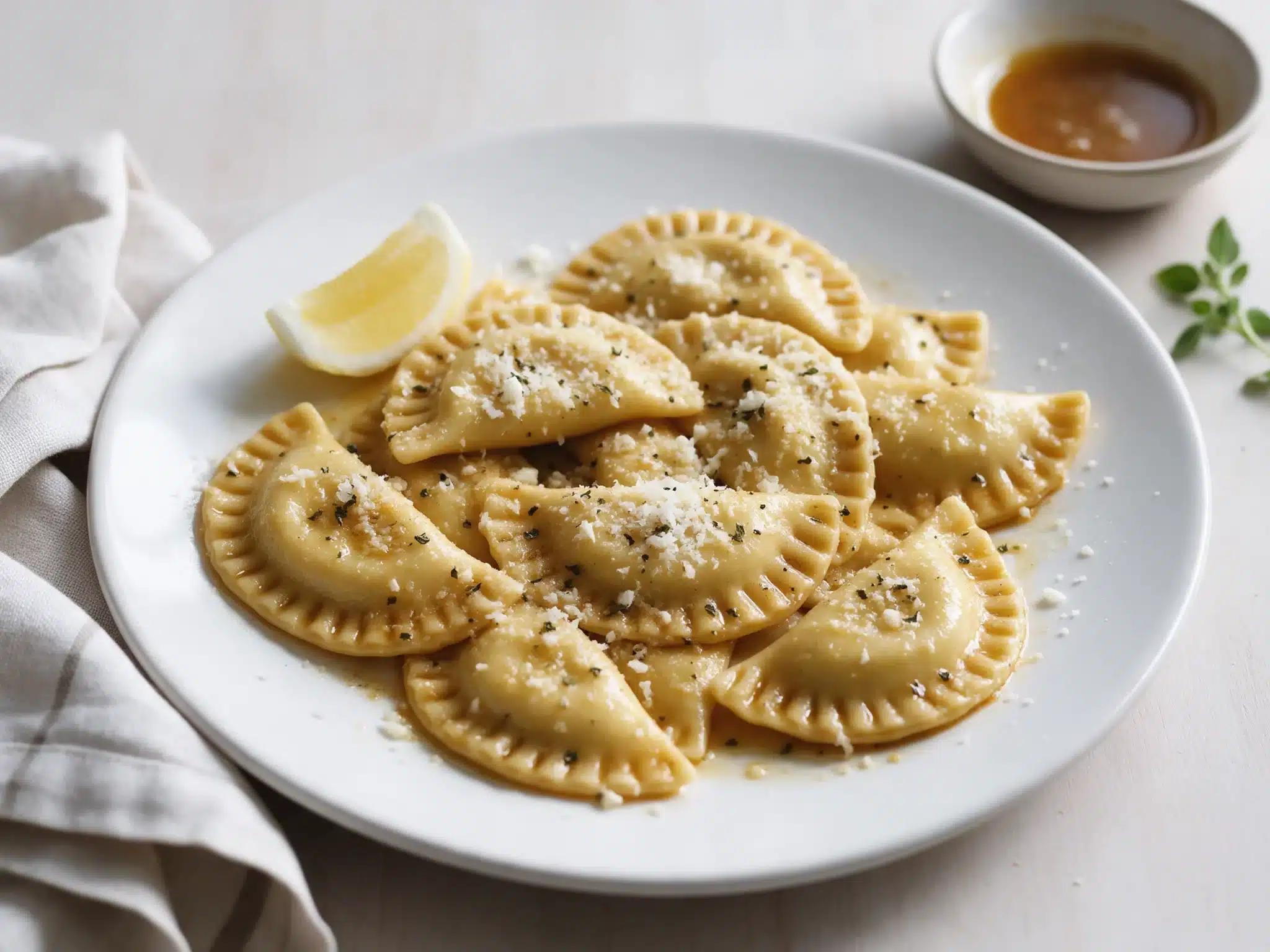
Cypriot Halloumi Ravioli with Dried Mint and Brown Butter
Ingredients
Method
- Mix the flour and 1/2 tsp salt in a large bowl and make a well in the middle. Add 1 egg, the olive oil and 90 ml water, and stir with a fork until shaggy. Knead on a clean counter for 8 minutes, until smooth and slightly springy. If it's crumbly, add water 1 tsp at a time. If it sticks, dust with a little flour. Wrap in plastic and rest for 30 minutes.
- While the dough rests, mix 250 g finely grated halloumi with the second egg, 2 tsp dried mint and the pepper. Squeeze a small handful. It should hold together. If it's crumbly, stir in 1 tsp water. Skip extra salt, since the halloumi is already salty.
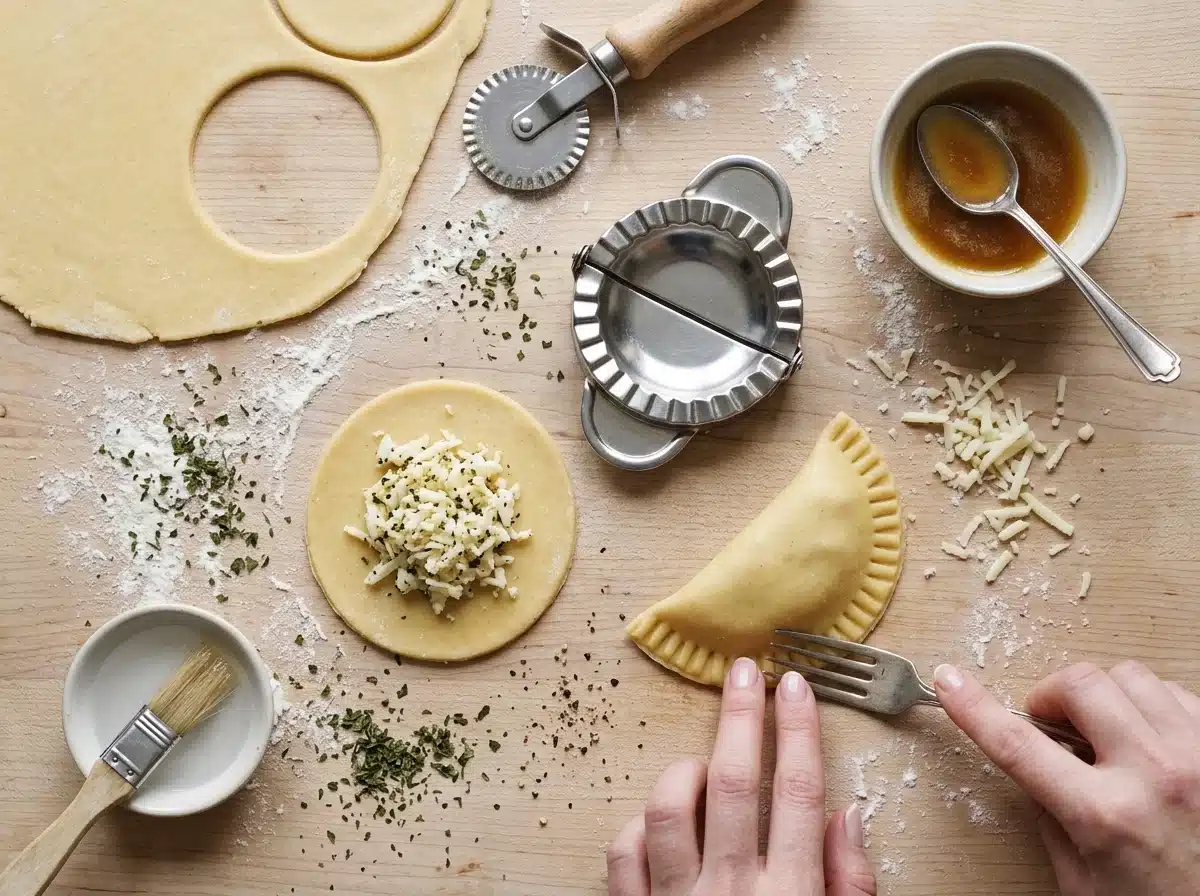
- Cut the rested dough into 4 pieces and keep 3 wrapped. Roll one piece on a lightly floured counter to about 1.5 mm, thin enough to see your hand shadow through it. Cut rounds with the 8 cm / 3-inch cutter.
- Put 1 heaping tsp of filling (about 8 g) in the center of each round. Brush the edge with water, fold in half, and press out the air as you seal. Crimp with a fork. If the edge isn't sealed, or you add more filling than this, the ravioli burst in the water. Set them on the floured towel on the 33 x 46 cm sheet pan, not touching. Repeat with the other pieces and reroll the scraps once. You should end up with about 35.
- Bring 3.5 L water and 2 tsp salt to a gentle boil in the 5-quart / 4.7 L pot. Add half the ravioli, about 18, and cook for 4 to 5 minutes, until they float and the edges feel tender. Lift them out with a slotted spoon onto a warm plate and cook the second batch the same way.
- While the second batch boils, melt the butter in the 26 cm / 10-inch skillet over medium heat. Cook for 3 to 4 minutes, swirling, until it turns light golden and smells nutty. Take the pan off the heat and stir in 1 tsp dried mint.
- Add all the ravioli to the butter and toss gently for 30 seconds to coat. Divide among 4 plates, top with 50 g grated halloumi and a pinch of dried mint, and serve right away.
Notes
- Use no more than 1 heaping teaspoon of filling per ravioli.
- Skip extra salt in the filling, because halloumi is already salty.
- Roll the dough thin enough to see your hand shadow through it.
- Serve right after tossing in butter, while the ravioli are hot and soft.
Tips for Success
- Keep any dough you’re not rolling wrapped in plastic, because thin dough dries out fast and cracks at the folded edge.
- Grate the halloumi on the fine side of a box grater so the filling packs tightly and melts evenly inside the pasta.
- Dust the tray with flour and space the ravioli so they don’t touch, or they’ll stick together and tear when lifted.
- Cook the ravioli in two batches in a gentle boil, not a hard one, so they don’t knock together and split.
- Watch the butter closely and take it off the heat once it smells nutty and turns light golden, because it burns within seconds.
Variations
- Serve in hot chicken broth instead of butter, about 250 ml per bowl, with the extra halloumi and dried mint on top.
- Swap 100 g of the halloumi in the filling for anari or ricotta for a softer, milder middle.
- Stir a teaspoon of finely grated lemon zest into the brown butter for a fresher finish.
Storage and Reheating
Cypriot ravioli are best eaten right after cooking. Once the butter cools it sets, and the thin dough turns soft and gummy, so I only cook what we’ll eat.
To make them ahead, freeze them uncooked. Lay the shaped ravioli in a single layer on a floured tray, freeze for 1 hour until firm, then move them to a freezer bag for up to 2 months.
Boil them straight from the freezer for 6 to 7 minutes in gently boiling salted water, without thawing. Thawing first makes them stick together.
Serving Suggestions
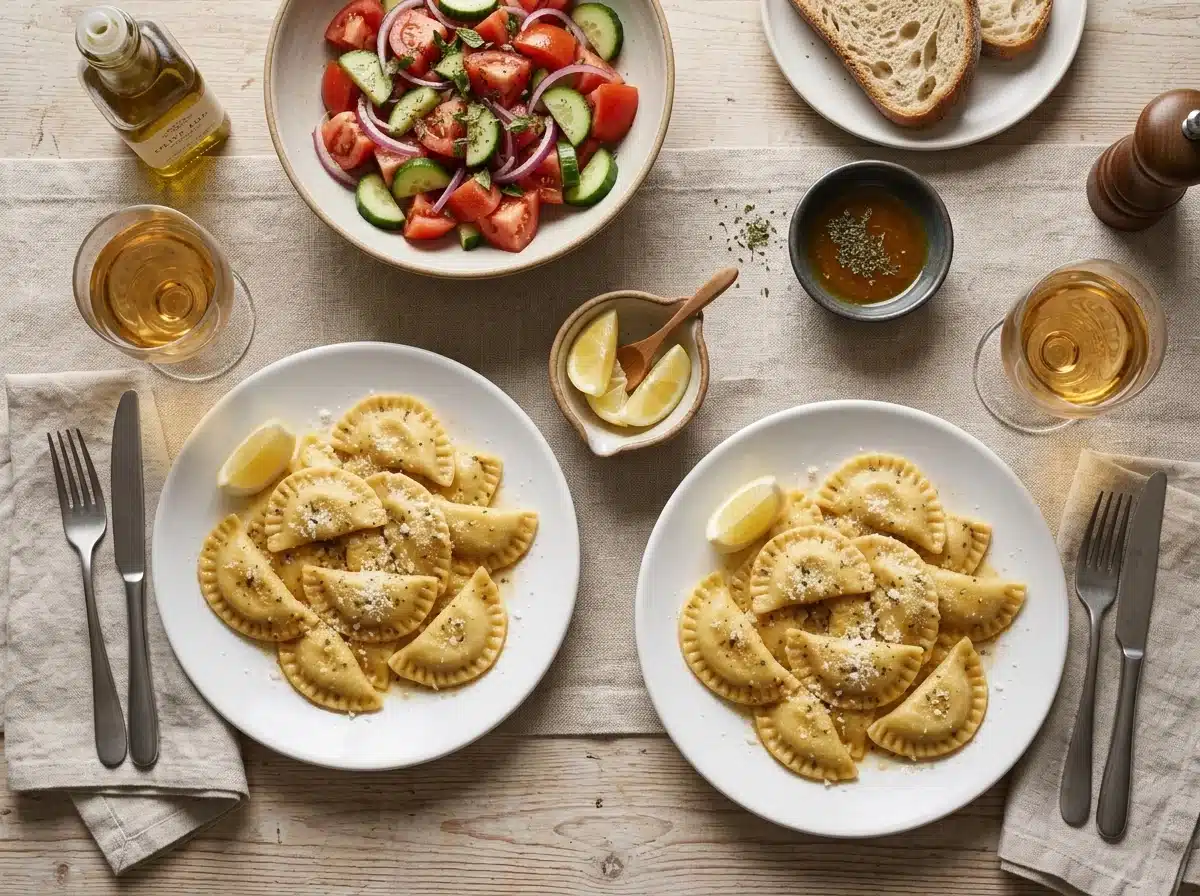
I like these with a simple cucumber and tomato salad dressed with olive oil and lemon. The fresh crunch works well against the salty halloumi.
For something lighter, serve the ravioli in hot chicken broth, about 250 ml per bowl, and skip the butter. Add the grated halloumi on top at the table.
A squeeze of lemon over each bowl cuts the richness. Set the table before the second batch comes out, since these don’t wait well.
FAQ
Why are my halloumi ravioli opening in the water?
They usually open because the edges weren’t sealed or there was too much filling. Use about 1 heaping teaspoon per round, brush the edge with water, and press out the air before crimping with a fork. Boil them gently, not hard, so they don’t knock against each other.
Can I use fresh mint instead of dried mint in the filling?
Yes, use about 2 tablespoons of finely chopped fresh mint for the 2 teaspoons of dried. The flavor will be greener and lighter, not the warm, earthy taste dried mint gives. Chop it finely so it doesn’t tear the thin dough when you seal the edges.
Can I freeze Cypriot ravioli before boiling them?
Yes, freeze them uncooked. Lay them in a single layer on a floured tray for 1 hour until firm, then move them to a freezer bag for up to 2 months. Boil straight from frozen for 6 to 7 minutes, without thawing, or they turn sticky.
Should I serve Cypriot ravioli in chicken broth or with brown butter?
Both work, so go with what you like. Brown butter with extra grated halloumi is richer and quicker. Hot chicken broth, about 250 ml per bowl, is lighter and lets the mint come through. If you use broth, go easy on extra salt since the halloumi is already salty.
Is halloumi ravioli vegetarian?
It has no meat, but not every halloumi is vegetarian. Some brands use animal rennet, so check the label for vegetarian or microbial rennet if that matters to you. The dough also has egg, so it isn’t vegan, and the flour means it contains gluten.
What is the difference between Cypriot ravioli and Italian ravioli?
Cypriot ravioli are usually half-moons filled with grated halloumi and dried mint. Italian ravioli are often squares filled with ricotta, spinach or meat. The Cypriot dough is simple, made with flour, egg and water, and the dish is often finished with butter or broth plus more halloumi.