Jump to Recipe
Mediterranean roasted vegetable couscous is a warm bowl of soft couscous tossed with roasted zucchini, eggplant, peppers, and onion, finished with feta, olives, and lemon juice. The vegetables turn soft and a little charred at the edges, and the couscous soaks up all the oil and juices left on the pan.
It tastes fresh and a little tangy, with the lemon cutting through the salty feta and olives. The roasted vegetables add a mild sweetness once their edges caramelize.
I make this when I have a few vegetables sitting in the fridge that need using up. It works as a side with grilled chicken pita bowls or fish, or on its own as a light lunch.
You don’t need anything fancy here. One sheet pan for the vegetables and a bowl for the couscous is really all it takes.
Why You’ll Love This Recipe
- One sheet pan does most of the work
- Good warm or cold the next day
- Feeds four with pantry-friendly ingredients
- Easy to adjust with whatever vegetables you have
Ingredient Notes
- couscous: Regular fine couscous cooks just from boiling stock poured over it. Pearl couscous works too but needs about 10 minutes of simmering instead.
- eggplant: Cut it into even 2 cm cubes so it roasts through without turning mushy on the outside before the center softens.
- feta: Feta is salty on its own, so taste the couscous before adding extra salt at the end.
- vegetable stock: Water works fine if you don’t have stock, but the stock adds a bit more flavor to the couscous.
- kalamata olives: Any brined black or green olive works here. Just pit them and roughly chop before adding.
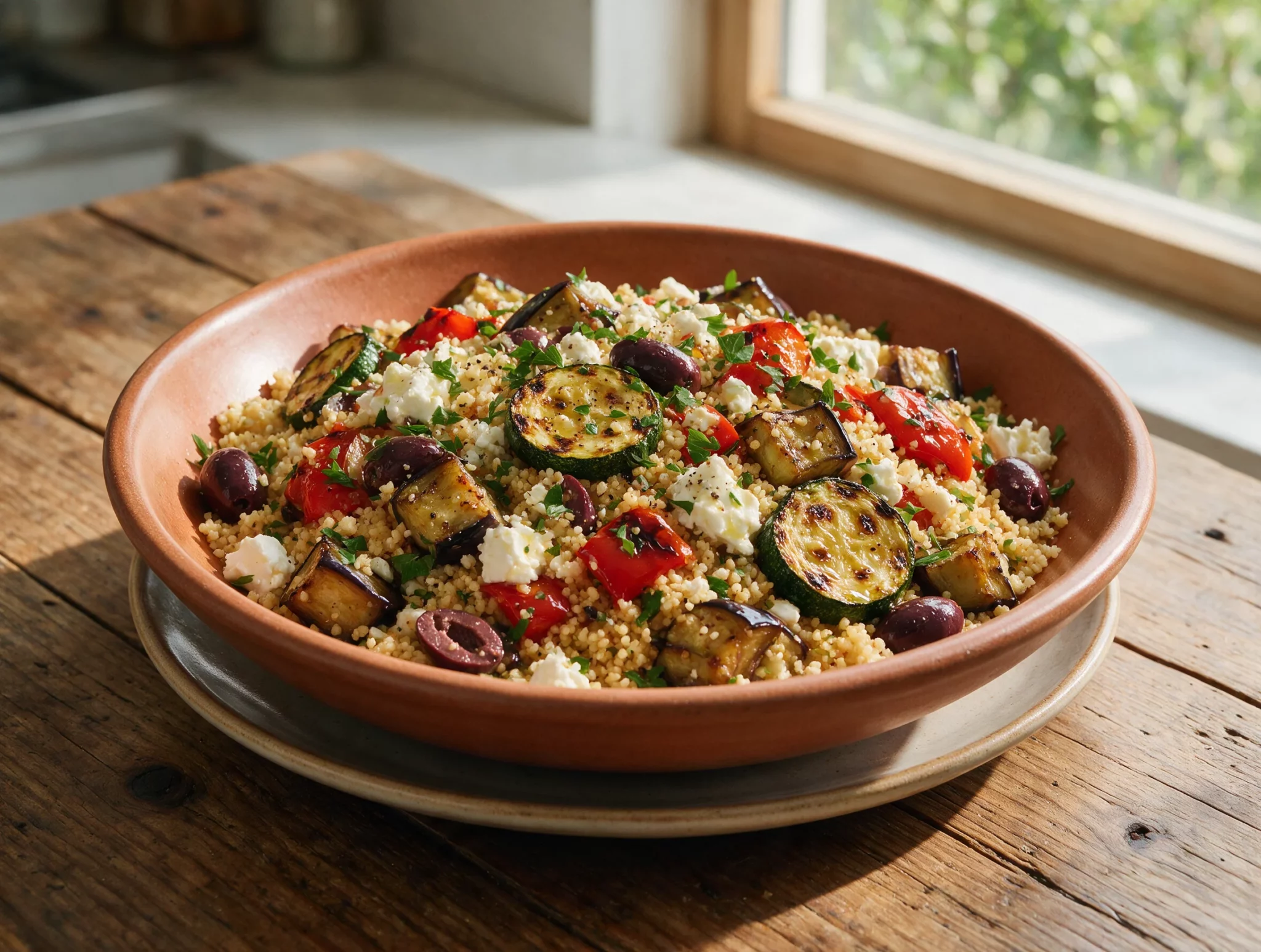
Roasted Mediterranean Vegetables with Couscous
Ingredients
Method
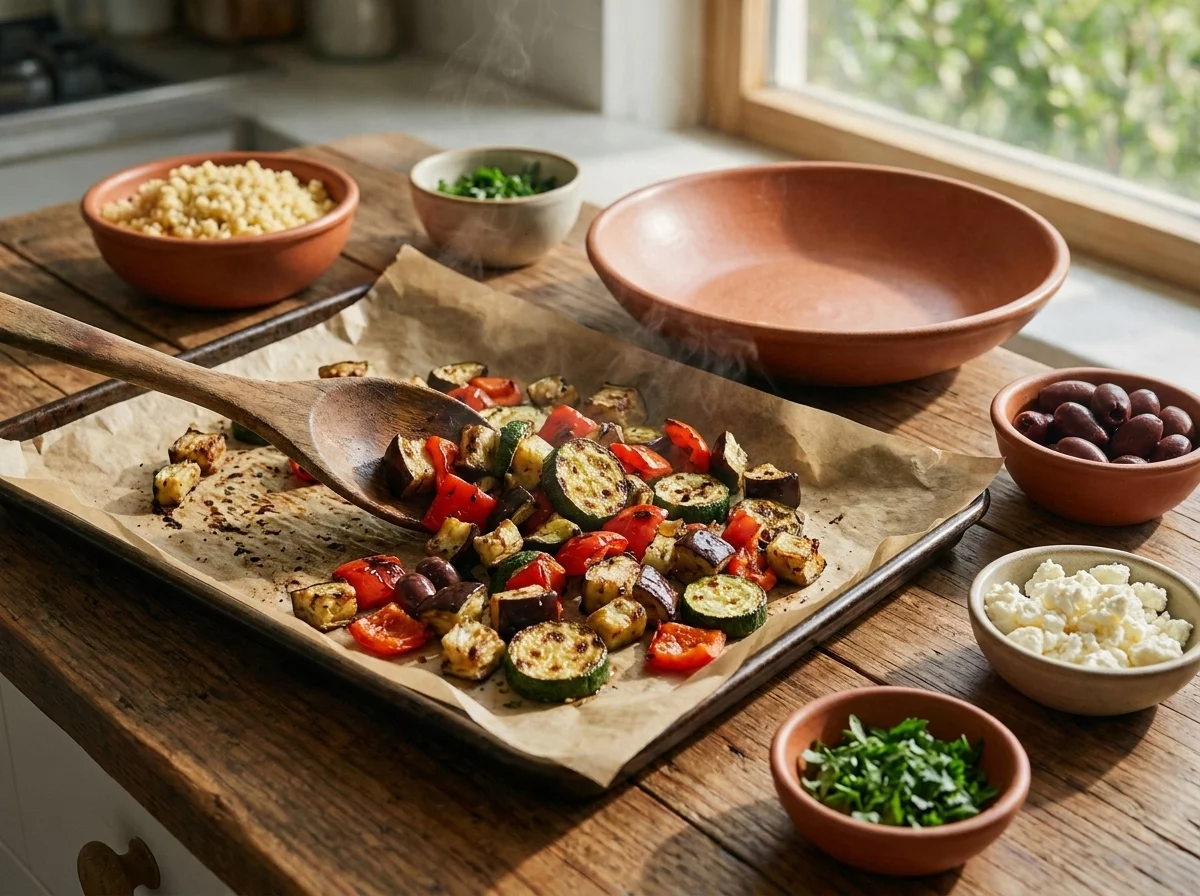
- Heat the oven to 200 C / 400 F. Line a sheet pan (33 x 46 cm / 13 x 18 inch) with parchment paper.
- In a large mixing bowl, toss the zucchini, bell pepper, eggplant, onion, and garlic with 3 tbsp olive oil, the oregano, salt, and pepper.
- Spread the vegetables on the sheet pan in a single layer, giving them space so they roast instead of steam. Roast for 20 minutes.
- Add the cherry tomatoes to the pan, toss gently, and roast for another 8 to 10 minutes, until the vegetables are soft and charred at the edges.
- While the vegetables roast, bring the vegetable stock to a boil in a small saucepan.
- Put the couscous in a large heatproof bowl. Pour the boiling stock over it, cover, and let it sit for 5 minutes until the liquid is absorbed.
- Fluff the couscous with a fork to break up any clumps. Drizzle with 1 tbsp olive oil and the lemon juice.
- Add the roasted vegetables to the couscous and toss gently to combine.
- Fold in the olives, feta, and parsley.
- Taste and add more salt if needed. Serve warm or at room temperature.
Notes
- Roast vegetables in a single layer, don't crowd the sheet pan.
- Let couscous steam covered for a full 5 minutes before fluffing.
- Feta and olives are salty, taste before adding more salt.
- Serve warm, at room temp, or chilled the next day.
Tips for Success
- Cut the vegetables into similar-sized pieces so they roast evenly and finish at the same time.
- Spread vegetables in a single layer on the sheet pan, or they’ll steam instead of char at the edges.
- Use boiling stock, not warm, to fully soften the couscous in 5 minutes without it turning gummy.
- Taste before adding extra salt since feta and olives are both salty on their own.
- Swap in whatever vegetables are in season, like fennel or squash, keeping the total weight about the same.
Variations
- Add a can of drained chickpeas for a heartier, protein-rich version of this couscous.
- Swap feta for grilled halloumi if you want a firmer, milder cheese with a similar salty bite.
- Use pearl couscous instead of regular for a chewier bite and a slightly nuttier flavor.
Storage and Reheating
Keep leftovers in an airtight container in the fridge for 3 to 4 days. The lemon and olive oil keep it tasting fresh even after a day or two.
Eat it cold or at room temperature straight from the fridge, since that’s how the texture holds up best. If you want it warm, microwave for 60 to 90 seconds, but the couscous will soften a bit more and the vegetables lose some of their char.
I don’t recommend freezing this one. The vegetables turn watery once thawed, and the feta gets grainy.
Serving Suggestions
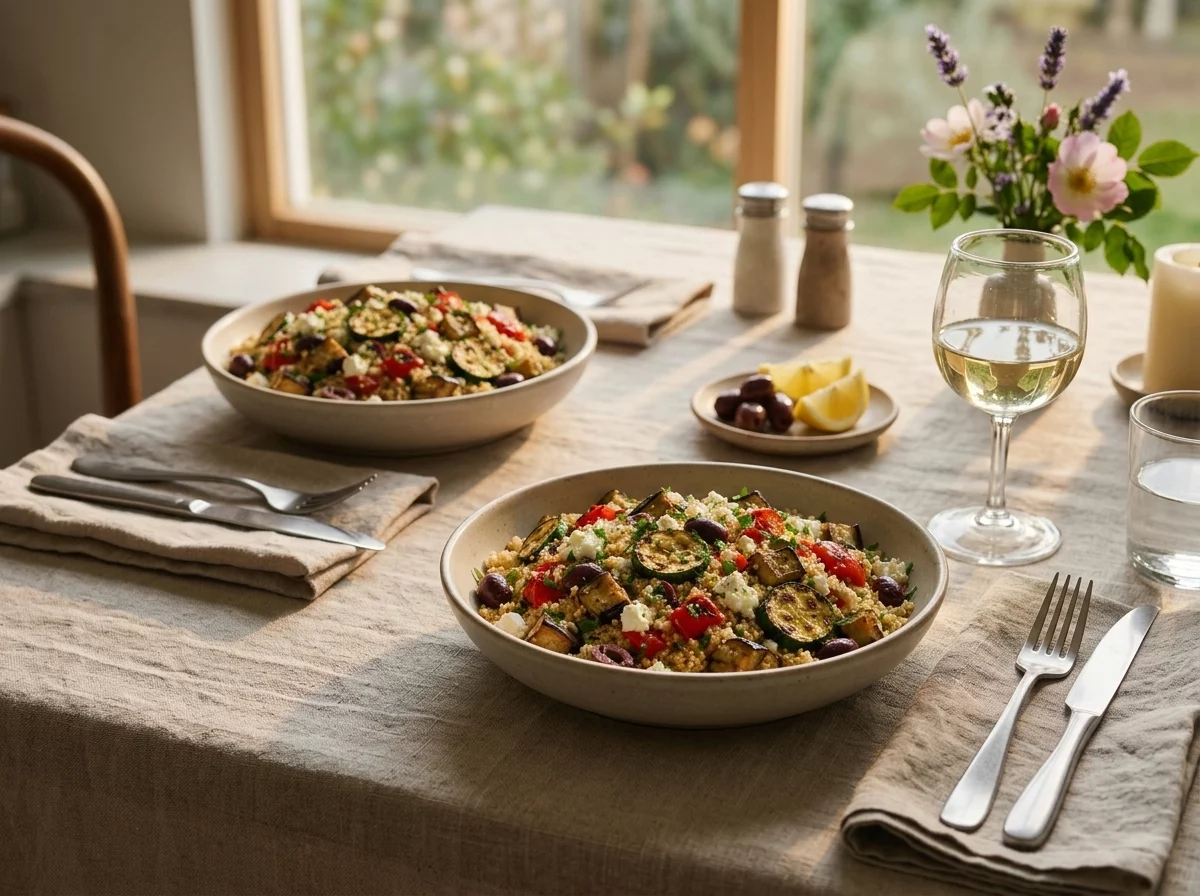
Serve this couscous warm as a side with grilled chicken, lamb kofta, or pan-seared fish. It also works as a light main on its own, maybe with a dollop of yogurt on top.
For a bigger spread, put it out with warm pita, hummus, and a simple cucumber tomato feta salad. A glass of chilled white wine goes well alongside it too.
Leftovers pack easily into a lunchbox with a lemon wedge on the side to squeeze on right before eating.
FAQ
Why is my couscous mushy instead of fluffy?
Too much liquid or not enough steaming time causes mushy couscous. Use 250 ml boiling stock for 200 g couscous, cover, and let it sit 5 minutes before fluffing with a fork. If it still feels wet, leave the lid off for a minute or two so the extra steam can escape.
Can I use quinoa instead of couscous in this recipe?
Yes, quinoa works, though the texture changes a bit. Rinse 180 g quinoa and simmer in 350 ml stock for about 15 minutes until the liquid is gone, then fluff and mix with the roasted vegetables the same way. It has a nuttier flavor and holds up well as leftovers.
Can I make this roasted vegetable couscous ahead of time?
Yes, this dish holds up well made ahead. Roast the vegetables and cook the couscous up to 2 days in advance, keep them separate in the fridge, then toss together with the feta, olives, and lemon right before serving so the couscous doesn’t turn soggy.
What goes well with Mediterranean roasted vegetable couscous?
Grilled chicken, lamb kofta, or pan-seared fish all pair well since the couscous is mild and a little tangy from the lemon. For a vegetarian meal, serve it alongside a Mediterranean white bean salad and warm pita, or spoon it into a bowl with a dollop of yogurt on top.
Is this roasted vegetable couscous gluten free?
No, regular couscous is made from wheat, so this dish contains gluten. If you need a gluten-free version, swap the couscous for the same amount of cooked quinoa or rice and follow the rest of the recipe as written.
Can I leave out the feta to make this dairy free?
Yes, just skip the feta and the dish stays dairy free. The olives and lemon still bring enough salt and brightness, but you can add a spoon of tahini or extra olive oil at the end for richness.