
Jump to Recipe
Spanakopita is a Greek savory pie made with layers of phyllo dough wrapped around a filling of wilted spinach, feta, and fresh herbs, baked until the top turns deep golden and shatters when you cut into it.
The filling is salty from the feta and fresh from the dill and parsley, while the phyllo stays light and crisp if you brush every layer with butter. It’s rich but not heavy, since spinach makes up most of the filling.
I make this when I want something that looks like more effort than it actually is. Once the spinach is squeezed dry and the filling is mixed, layering the phyllo goes fast.
The one step you can’t skip is squeezing the spinach until it’s nearly dry. Skip that and the bottom layers turn soft and gummy instead of crisp.
Why You’ll Love This Recipe
- Crisp phyllo top with a soft, savory spinach filling underneath
- Feeds a crowd from one baking dish
- Good made ahead and reheated for a weeknight dinner
- Freezes well before or after baking
Ingredient Notes
- Fresh spinach: You can use frozen instead. Thaw two 280 g packages and squeeze out the water, frozen spinach holds even more liquid than fresh.
- Feta cheese: Buy a block and crumble it yourself, pre-crumbled feta is drier and less flavorful. Taste it before adding extra salt to the filling.
- Phyllo dough: Thaw it in the fridge overnight and keep it covered with a damp towel while you work, it dries out and cracks fast.
- Fresh dill: Dried dill works in a pinch, use about 1 tablespoon instead of 1/4 cup fresh, but fresh gives a brighter flavor.
- Unsalted butter: Melted butter between the layers is what makes the phyllo crisp and golden. Olive oil works too but the crust is less flaky.
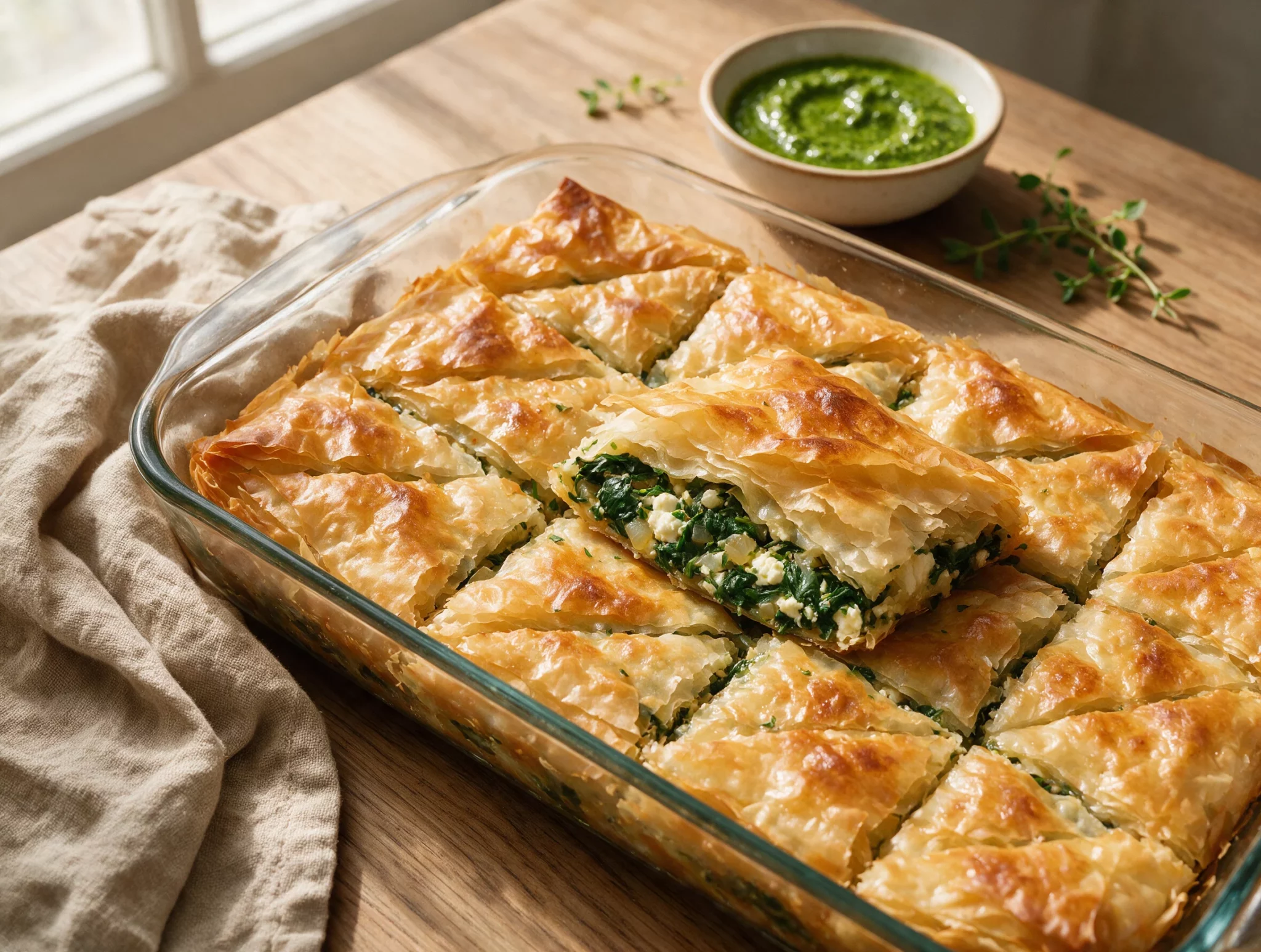
Crispy Baked Greek Spanakopita: Spinach and Feta Pie
Ingredients
Method
- Heat the olive oil in a 12-inch / 30 cm skillet over medium heat. Add the onion and cook for 4 to 5 minutes, until soft.
- Add the scallions and garlic. Cook for 1 minute, until fragrant.
- Add the spinach in batches, stirring until wilted and most of the liquid has cooked off, 6 to 8 minutes. Transfer to a colander and let it cool.
- Once cool enough to handle, squeeze the spinach hard with your hands or press it in a clean towel until barely any liquid drips out. This is the step that matters most, wet spinach is the main reason spanakopita turns soggy.
- In a large bowl, mix the squeezed spinach with the feta, dill, parsley, eggs, pepper, and nutmeg. Taste before adding salt.
- Heat the oven to 180 C / 350 F. Brush a 9 x 13-inch / 33 x 23 cm baking dish with melted butter.
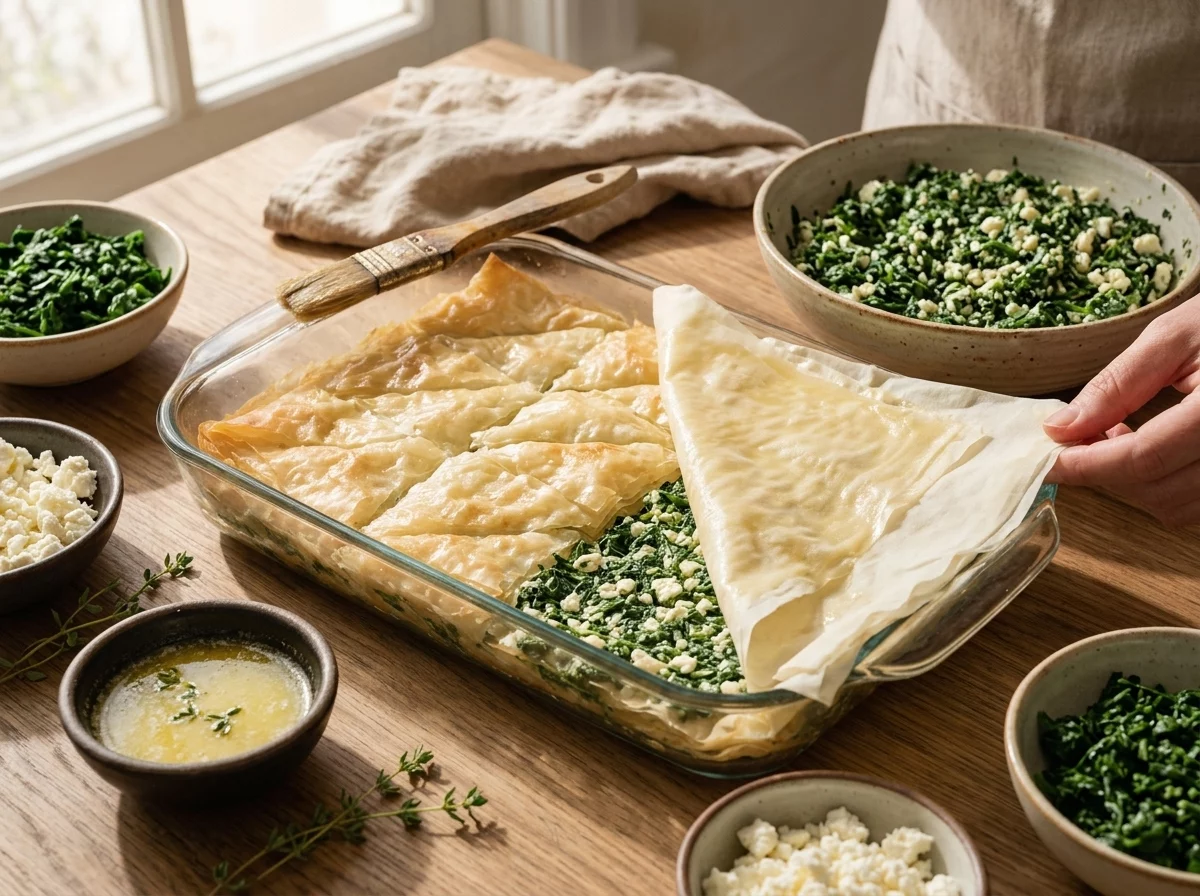
- Lay one sheet of phyllo in the dish, letting the edges hang over the sides, and brush it with butter. Repeat with about half the sheets, brushing each one before adding the next. Keep the rest covered with a damp towel.
- Spread the spinach and feta filling evenly over the phyllo base.
- Layer the remaining phyllo sheets on top, brushing each one with butter, and fold the overhanging edges over the top to seal the pie.
- Score the top into 8 squares or diamonds with a sharp knife, cutting through only the top few layers.
- Bake for 45 to 50 minutes, until the top is deep golden brown and crisp.
- Cool in the dish for 15 minutes before slicing along the scored lines.
Notes
- Squeeze the spinach dry before mixing, this is the step most people skip.
- Cover unused phyllo sheets with a damp towel while assembling.
- Score the top before baking so slices come out clean later.
- Let the pie rest 15 minutes before cutting so it holds together.
Tips for Success
- Squeeze the wilted spinach completely dry before mixing it with the feta, or the pie will turn soggy.
- Keep unused phyllo sheets covered with a damp towel while you assemble, so they don’t dry out and crack.
- Score the top layer into squares before baking, it makes clean cuts easier once the pie is done.
- Taste the filling before adding salt, feta is already salty and can overwhelm the dish quickly.
- Brush every phyllo layer with butter, even the middle ones, or the layers won’t separate and crisp.
Variations
- Swap half the feta for ricotta or cottage cheese for a milder, creamier filling.
- Add chopped leeks with the onion for a sweeter, more delicate flavor in the filling.
- Cut the phyllo into strips and fold the filling into individual triangles instead of one pie.
Storage and Reheating
Leftover spanakopita keeps in the fridge for 3 to 4 days, covered tightly or in an airtight container.
Reheat pieces in the oven at 180 C / 350 F for 10 to 12 minutes, until the top crisps up again. Skip the microwave, it turns the phyllo soft and chewy instead of crisp.
You can also freeze baked slices for up to 2 months. Reheat them straight from frozen in the oven at 180 C / 350 F for about 20 minutes, until heated through.
Serving Suggestions
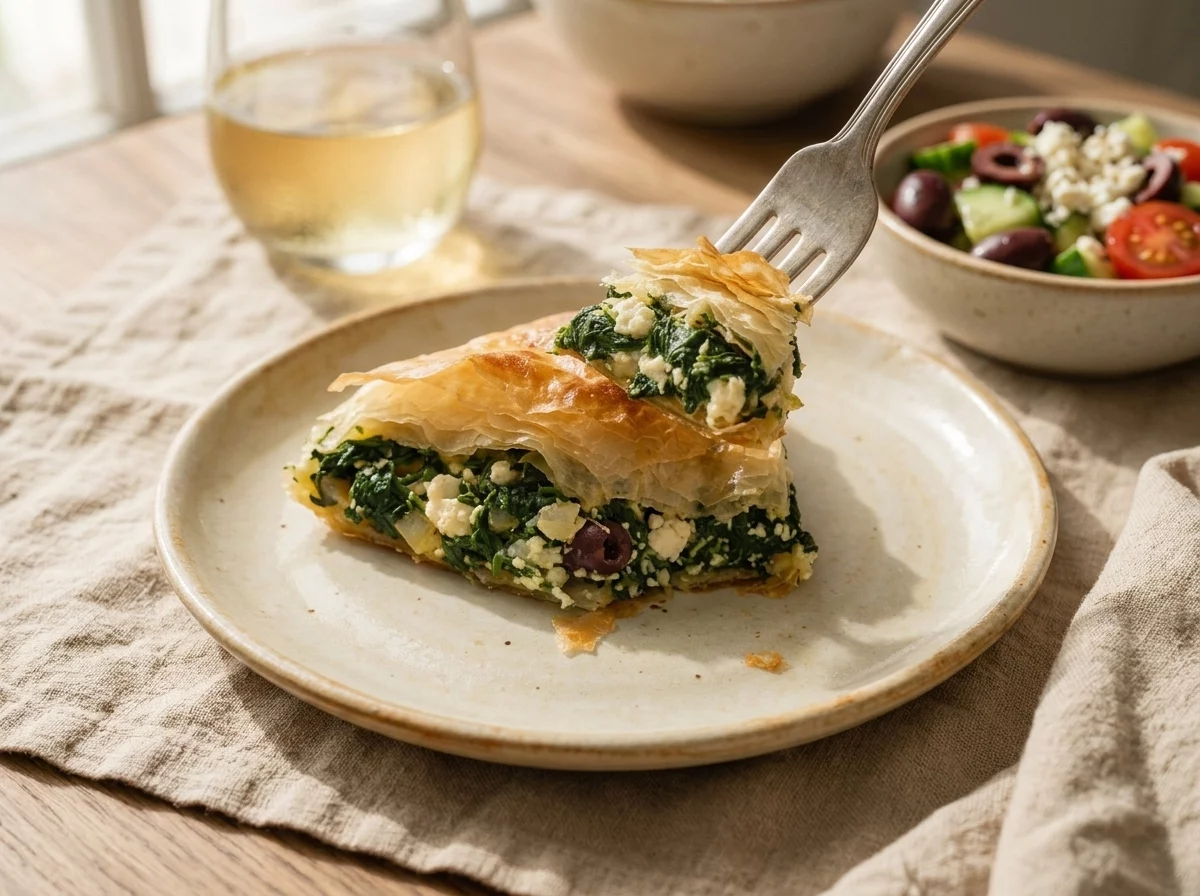
Spanakopita works as a main dish with a simple cucumber tomato feta salad of tomato, cucumber, and olives on the side.
I also like to cut it into small squares and serve it as part of a mezze spread, next to hummus, olives, and warm pita.
It holds up fine at room temperature, so it’s an easy dish to bring to a potluck or serve at brunch.
FAQ
Why is my spanakopita soggy in the middle?
Soggy filling usually means the spinach wasn’t squeezed dry enough before mixing. Fresh spinach releases a lot of water when it wilts, so press it hard in a colander or twist it in a clean towel until barely any liquid drips out. Wet filling steams the bottom phyllo layers instead of letting them crisp.
Can I use frozen spinach instead of fresh spinach in spanakopita?
Yes, frozen spinach works well and skips the wilting step. Thaw two 280 g packages completely, then squeeze out as much water as you can with your hands or a towel, since frozen spinach holds even more moisture than fresh. Mix it straight into the filling.
Can I assemble spanakopita ahead of time and freeze it unbaked?
Yes, this pie freezes well before baking. Layer and score the phyllo as usual, then wrap the dish tightly and freeze for up to 2 months. Bake straight from frozen at 180 C / 350 F for about 60 to 65 minutes, until the top is deep golden.
What goes well with spanakopita for a full meal?
A simple Greek salad with cucumber, tomato, and olives is the classic pairing. Lemony rice or crispy potatoes with tzatziki work too if you want something heartier, and a bowl of plain yogurt on the side cools down the salty feta filling nicely.
Is spanakopita gluten free?
No, regular spanakopita isn’t gluten free because phyllo dough is made from wheat flour. You can find gluten-free phyllo or filo-style sheets in some specialty stores, though the texture is more delicate and tears more easily when layering.
What’s the difference between spanakopita and tiropita?
Spanakopita is filled with spinach and feta, while tiropita is a cheese-only pie, usually feta mixed with ricotta or another soft cheese. Both use the same buttery phyllo layers, so the difference comes down to what’s inside, not how the pastry is baked.